
If you have a basement, you already know one thing: water and moisture are your biggest enemies. A damp basement can lead to cracks, mold, bad smells, health problems, and even structural damage over time.
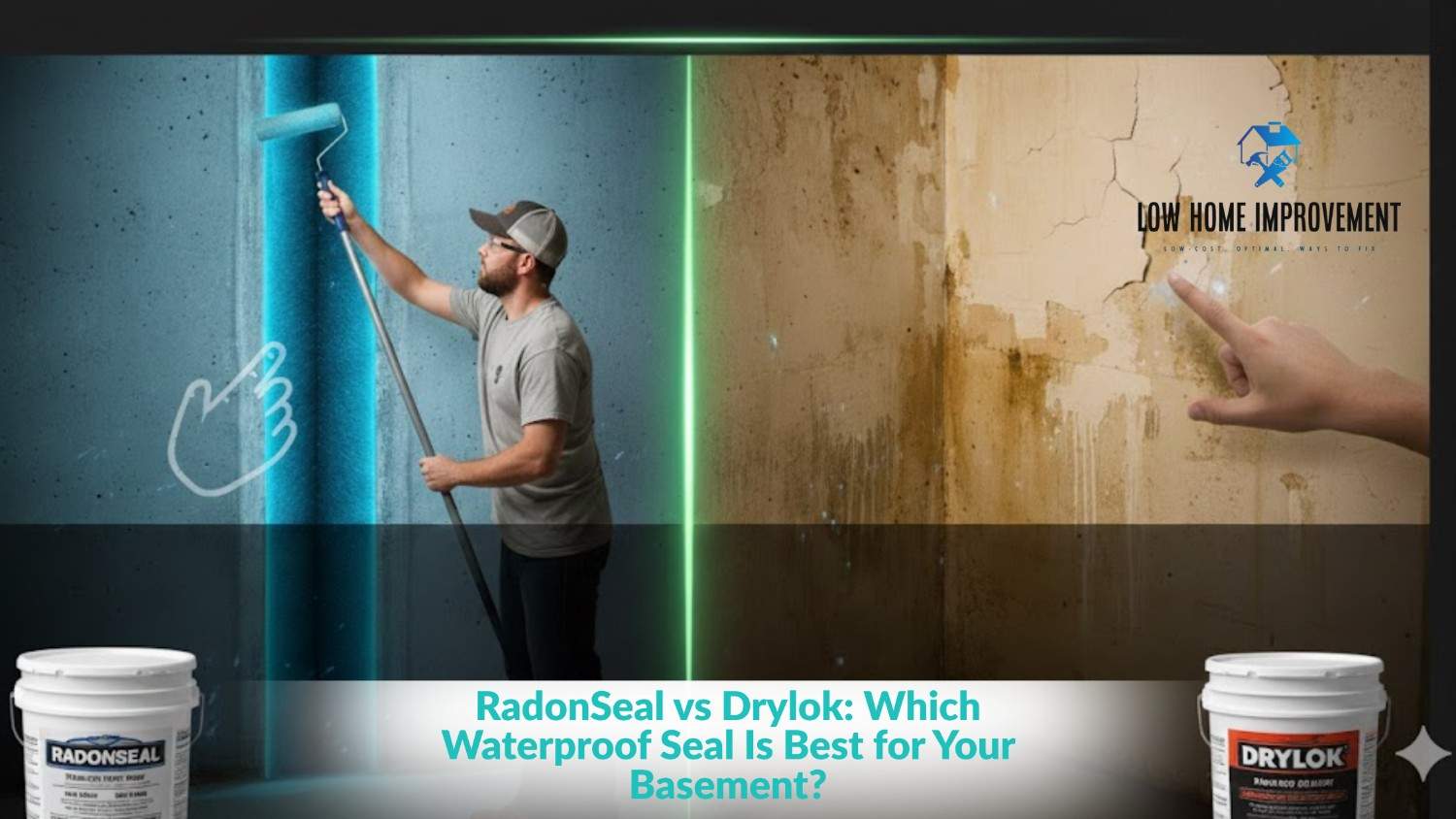
That’s why many homeowners search for RadonSeal vs Drylok when choosing a concrete waterproofing solution. Both products are popular, but they work in very different ways.
In this detailed guide, we’ll compare RadonSeal vs Drylok step by step—how they work, how long they last, how they handle moisture, mold, and radon gas, and which one is better for your basement walls.
This guide is written in simple, easy language, with tables, examples, and clear explanations, so anyone can understand—even if you’ve never done a home project before.
Why Basement Waterproofing Is So Important
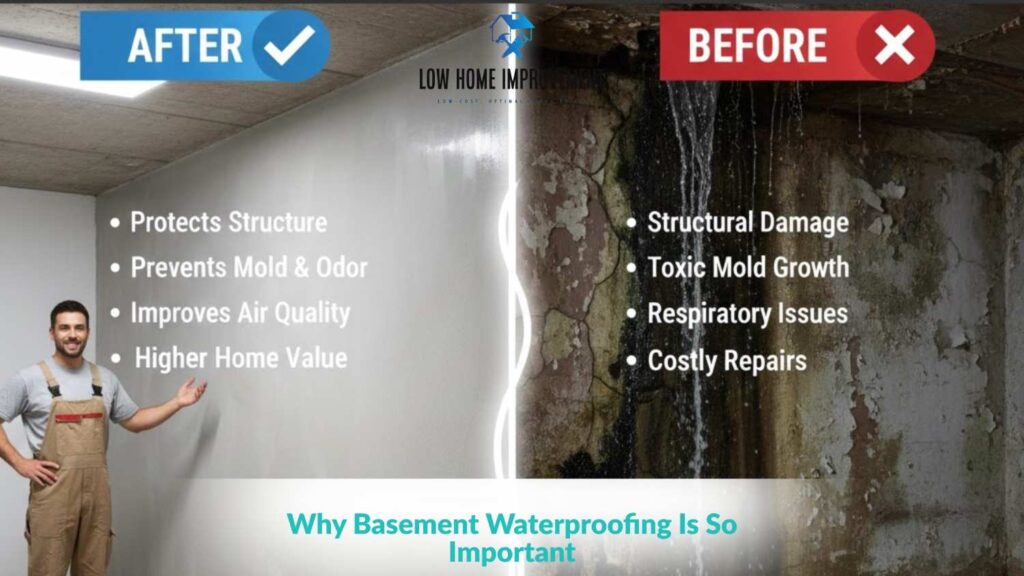
Basement waterproofing is extremely important because basements sit below ground level and are constantly exposed to moisture, rainwater, and soil pressure. Without proper waterproofing, water can seep through concrete pores and cracks, leading to damp walls, mold growth, musty odors, and long-term structural damage.
Excess moisture can also increase humidity levels inside the home, creating an unhealthy living environment and worsening respiratory issues. In many homes, poor waterproofing also allows radon gas to enter through concrete foundations.
By waterproofing your basement correctly, you protect your home’s structure, improve indoor air quality, prevent costly repairs, and create a safer, drier, and more usable space for your family.
Basements sit below ground level, which means they are always under pressure from:
- Rainwater
- Groundwater
- Humidity
- Soil moisture
- Seasonal weather changes
Without proper basement waterproofing, you may face:
- Water seepage through concrete walls
- Mold and mildew growth
- Musty odors
- Cracks in foundation walls
- High humidity levels
- Radon gas entering your home
Radon gas is especially dangerous. It is invisible, odorless, and one of the leading causes of lung cancer after smoking.
That’s why choosing the right concrete sealer matters so much.
What Is RadonSeal?
RadonSeal is a deep-penetrating, silicate-based concrete sealer designed to protect concrete from the inside out. Unlike surface-level coatings that sit on top of the concrete, RadonSeal penetrates deep into the structure—up to 4 inches—where it permanently seals the internal pores.
This internal sealing helps strengthen the concrete while reducing moisture, water seepage, and radon gas entry. Because it becomes part of the concrete itself, RadonSeal does not peel, chip, or wear away over time, making it a long-lasting solution for basement walls, foundations, and concrete slabs.
How RadonSeal Works
Concrete may appear solid, but it contains thousands of microscopic pores and capillaries that allow water vapor, moisture, and radon gas to move freely.
RadonSeal soaks into these pores and chemically reacts with lime and alkalis inside the concrete, forming a solid, gel-like barrier.
This reaction permanently blocks internal pathways, reducing moisture transmission, limiting radon gas release, and helping keep basement walls dry, strong, and healthier for long-term use.
RadonSeal:
- Soaks deep into concrete pores
- Reacts with lime and alkalis inside the concrete
- Forms a permanent gel-like seal
- Blocks water, vapor, and radon gas from inside
Instead of sitting on top, it becomes part of the concrete itself.
Key Benefits of RadonSeal
- Deep-penetrating concrete sealer
- Reduces radon gas emissions
- Stops moisture from inside the concrete
- Helps prevent mold growth
- Breathable (does not trap moisture)
- Long lifespan (15+ years)
What Is Drylok?
Drylok is a latex-based masonry waterproofing paint designed to protect concrete and masonry surfaces from moisture. Instead of penetrating deep into the concrete, it works by forming a thick, waterproof barrier on the surface of basement walls, foundations, bricks, and blockwork.
Once applied, Drylok hardens as it dries, sealing the outer layer of the concrete and helping block water from entering through the wall. It is commonly used for light to moderate moisture problems and is popular among homeowners because it is easy to apply with a brush or roller.
Drylok is often chosen for quick, DIY waterproofing projects where surface-level protection is sufficient.
How Drylok Works
Drylok:
- Is applied like thick paint
- Sits on top of concrete
- Forms a waterproof layer
- Blocks water from coming through
It’s popular for DIY basement waterproofing because it’s easy to apply with a brush or roller.
Key Benefits of Drylok
- Affordable
- Easy DIY application
- Good for light moisture problems
- Paint-like finish
- Available in multiple versions
See also Dolly Parton House
RadonSeal vs Drylok – Quick Overview
| Feature | RadonSeal | Drylok |
|---|---|---|
| Type | Silicate concrete sealer | Latex masonry waterproofer |
| Penetration | Deep (up to 4 inches) | Surface only |
| Application | Spray | Brush or roller |
| Lifespan | 15+ years | 5–10 years |
| Mold Control | From inside concrete | Surface-level |
| Radon Reduction | Yes | Very limited |
| DIY Friendly | Yes | Yes |
| Best For | Long-term protection | Short-term solutions |
RadonSeal vs Drylok: Key Differences Explained
Let’s now compare RadonSeal vs Drylok in detail, one feature at a time.
1. Usage: When to Use Each Product
RadonSeal Usage
RadonSeal is best when:
- You want long-term basement waterproofing
- You are worried about radon gas
- You want to reduce humidity and vapor
- Your concrete is newer (under 20 years)
It’s commonly used in:
- Basement walls
- Foundation walls
- Concrete slabs
- Cinder blocks
Drylok Usage
Drylok is better when:
- You need a quick DIY solution
- Moisture problems are light
- Budget is limited
- You want a paint-like finish
It’s often used on:
- Basement walls
- Foundations
- Brick and masonry walls
Best Use Case Comparison
| Situation | Better Choice |
|---|---|
| High radon levels | RadonSeal |
| Long-term waterproofing | RadonSeal |
| Light dampness | Drylok |
| DIY weekend project | Drylok |
| Mold prevention from inside | RadonSeal |
| Quick surface protection | Drylok |
2. Sealant Type: Deep vs Surface Protection
RadonSeal Sealant Type
- Water-based silicate sealer
- Chemically reacts with concrete
- Becomes part of the concrete
- Breathable and permanent
Drylok Sealant Type
- Latex-based masonry paint
- Sits on top of concrete
- Forms a waterproof skin
- Can peel or crack over time
3. Durability and Lifespan
RadonSeal Durability
RadonSeal can last 15+ years because:
- It doesn’t peel or chip
- It strengthens concrete internally
- It doesn’t wear off
Once applied properly, reapplication is rarely needed.
Drylok Durability
Drylok usually lasts 5–10 years, and sometimes less if:
- Applied on damp concrete
- Applied in thick coats
- Water pressure is high
It often needs 4–5 coats to last longer.
Lifespan Comparison
| Product | Average Lifespan | Maintenance |
|---|---|---|
| RadonSeal | 15+ years | Very low |
| Drylok | 5–10 years | Medium to high |
4. Application Method: Which Is Easier?
How to Apply RadonSeal
- Clean the concrete surface
- Repair cracks and gaps
- Make sure concrete is completely dry
- Spray thin coats evenly
- Wait 30–40 minutes between coats
- Allow 4–5 days for full absorption
How to Apply Drylok
- Clean the wall
- Remove loose paint
- Apply with brush or roller
- Let dry for 2–3 hours
- Apply 4–5 coats
See also TTweakHotel Discount Codes
Application Comparison
| Factor | RadonSeal | Drylok |
|---|---|---|
| Tools | Garden sprayer | Brush/roller |
| Coats Needed | 2–3 | 4–5 |
| Dry Time | Several days | Few hours |
| Skill Level | Easy | Very easy |
5. Moisture and Seepage Control
RadonSeal Moisture Control
RadonSeal:
- Seals concrete pores from inside
- Reduces humidity
- Stops vapor transmission
- Prevents long-term seepage
Drylok Moisture Control
Drylok:
- Blocks water from outside
- Handles surface water pressure
- Can trap moisture inside walls
Moisture Performance
| Feature | RadonSeal | Drylok |
|---|---|---|
| Vapor Control | Excellent | Limited |
| Internal Sealing | Yes | No |
| Risk of Trapped Moisture | Very low | Medium |
6. Mold Resistance
RadonSeal and Mold
- Stops moisture at the core
- Reduces mold growth naturally
- Prevents damp concrete
Drylok and Mold
- Contains biocide (Extreme version)
- Works only on the surface
- Trapped moisture may cause mold later
RadonSeal vs Drylok for Basement Walls: Which Is Better?
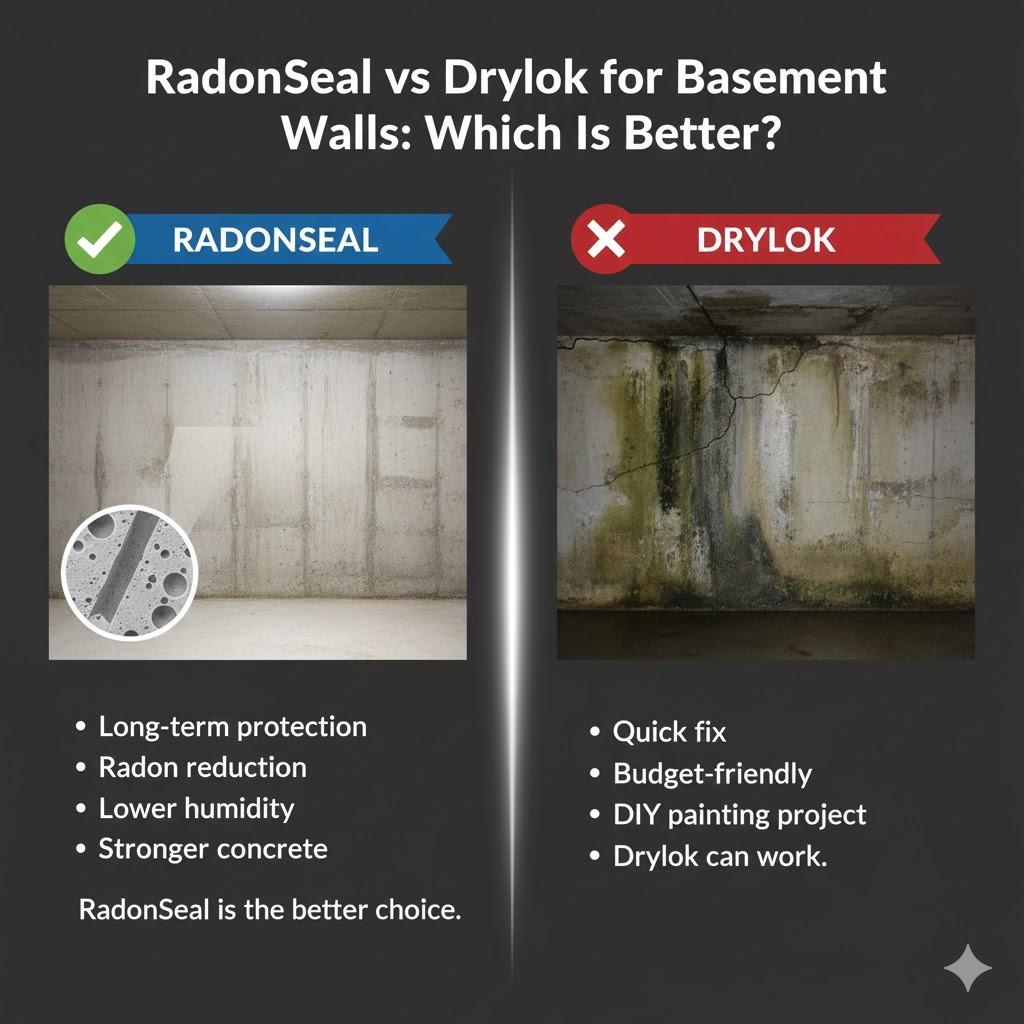
If your goal is:
- Long-term protection
- Radon reduction
- Lower humidity
- Stronger concrete
RadonSeal is the better choice
If your goal is:
- Quick fix
- Budget-friendly
- DIY painting project
Drylok can work
RadonSeal Variants: Which One Should You Choose?
RadonSeal offers multiple variants, each designed to handle different concrete conditions and levels of moisture or porosity. Choosing the right version depends on the age, density, and condition of your concrete surface.
Standard RadonSeal works best on newer poured concrete, where it can penetrate deeply and tighten small pores. RadonSeal Plus is formulated for older, more porous concrete and cinder block walls, allowing it to seal larger pores more effectively.
For demanding environments, RadonSeal Ion Bond Armor provides a stronger, chemically bonded barrier that offers enhanced moisture and vapor protection.
Selecting the correct RadonSeal variant ensures better penetration, longer-lasting results, and more effective waterproofing and radon reduction for your basement or foundation.
RadonSeal Variants Comparison
| Product | Best For | Key Feature |
|---|---|---|
| RadonSeal | New concrete (<20 yrs) | Deep penetration |
| RadonSeal Plus | Old porous concrete | Larger pore sealing |
| Ion Bond Armor | Harsh conditions | Strong hydrophobic barrier |
Drylok vs Other Sealants
Drylok vs Watertite
| Feature | Drylok | Watertite |
|---|---|---|
| Base | Latex | Oil-based |
| Pressure Resistance | Moderate | High (34 psi) |
| Application | Easy | Thick & slow |
Drylok vs Kilz
| Feature | Drylok | Kilz |
|---|---|---|
| Purpose | Waterproofing | Mold sealing & primer |
| Paint Over Old Walls | Limited | Yes |
| Best Use | Damp walls | Mold coverage |
RadonSeal Reviews: Is It Worth the Money?
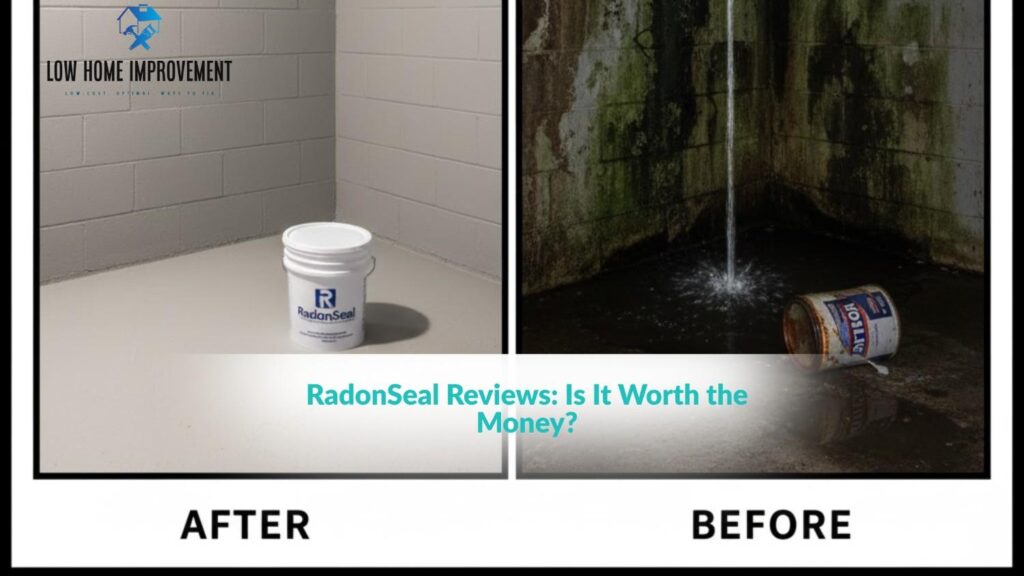
RadonSeal reviews from homeowners and professionals are generally very positive, especially for long-term basement protection. Most users report noticeably lower humidity levels, reduced radon readings, and cleaner, drier basement walls within weeks of application.
Many also appreciate that RadonSeal does not peel or crack, since it seals concrete from within rather than coating the surface. While the upfront cost is higher compared to paint-based sealers, reviewers often agree that the durability and performance justify the price.
Because RadonSeal can last 15 years or more with minimal maintenance, it often proves more cost-effective over time than cheaper products that require frequent reapplication.
Most users report:
- Lower humidity
- Reduced radon levels
- Cleaner basement walls
- Long-lasting results
The biggest downside is cost, but it pays off long-term.
Pros and Cons Summary
RadonSeal vs Drylok – Pros & Cons
| Category | RadonSeal | Drylok |
|---|---|---|
| Durability | Very high | Medium |
| Radon Control | Excellent | Poor |
| DIY Friendly | Yes | Yes |
| Cost | High upfront | Lower upfront |
| Long-Term Value | Excellent | Moderate |
Conclusion
Both RadonSeal and Drylok are effective products, but they serve different purposes and homeowner needs. RadonSeal is the better choice if you are looking for long-term, permanent protection that seals concrete from within, reduces radon gas levels, controls humidity, and keeps basement walls dry for decades.
It is ideal for homeowners who want a durable, low-maintenance solution. Drylok, on the other hand, is best suited for simple, short-term waterproofing projects where ease of application and lower upfront cost matter most.
It provides surface-level protection and works well for light moisture issues. Ultimately, a healthy basement depends on staying dry, safe, and mold-free—and selecting the right concrete sealer plays a crucial role in achieving that.
FAQs
1. Does RadonSeal really work for basement waterproofing?
Yes, RadonSeal works very effectively for basement waterproofing when applied correctly. It penetrates deep into the concrete and seals internal pores, preventing moisture, water seepage, and vapor transmission. Because it strengthens the concrete from within, it provides long-term protection without peeling or cracking.
2. Does Drylok seal out radon gas completely?
No, Drylok does not completely seal out radon gas. While it may reduce some vapor transfer by creating a surface barrier, it is mainly designed for waterproofing, not radon mitigation. For better radon reduction, a deep-penetrating sealer like RadonSeal is more effective.
3. Which is better for basement walls, RadonSeal or Drylok?
RadonSeal is better for basement walls if you want long-term protection, radon reduction, and moisture control from inside the concrete. Drylok is better for short-term or light moisture issues where a quick, surface-level waterproofing solution is needed.
4. What is the best concrete sealer for radon reduction?
The best concrete sealer for radon reduction is a silicate-based, deep-penetrating product like RadonSeal. It chemically reacts with the concrete to block internal pores, reducing radon gas movement and moisture from within the foundation.
5. Can Drylok trap moisture inside concrete walls?
Yes, Drylok can trap moisture inside concrete walls if applied over damp surfaces or high moisture conditions. Because it creates a surface barrier, trapped moisture may lead to peeling, cracking, or mold growth over time.
6. How long does RadonSeal last once applied?
RadonSeal typically lasts 15 years or more when applied to clean, dry concrete. Since it becomes part of the concrete structure, it does not wear off, peel, or require frequent reapplication.
7. How long does Drylok waterproofing paint last?
Drylok usually lasts between 5 to 10 years, depending on surface preparation, moisture levels, and the number of coats applied. In high moisture areas, it may require reapplication sooner.
8. Can RadonSeal be applied to old or porous concrete?
Yes, RadonSeal can be used on older concrete, but for highly porous or aged surfaces, RadonSeal Plus is recommended. It is specially designed to seal larger pores found in older concrete and cinder block walls.
9. Is Drylok good for preventing mold in basements?
Drylok can help prevent surface mold, especially versions that contain mildew-resistant additives. However, it does not stop moisture from inside the concrete, so mold may still develop if moisture becomes trapped behind the coating.
10. What are the disadvantages of sealing concrete walls?
Some disadvantages include improper application trapping moisture, higher upfront costs for deep-penetrating sealers, and the need for surface preparation. Surface coatings may peel or crack over time, while deep sealers require dry concrete for effective absorption.
