

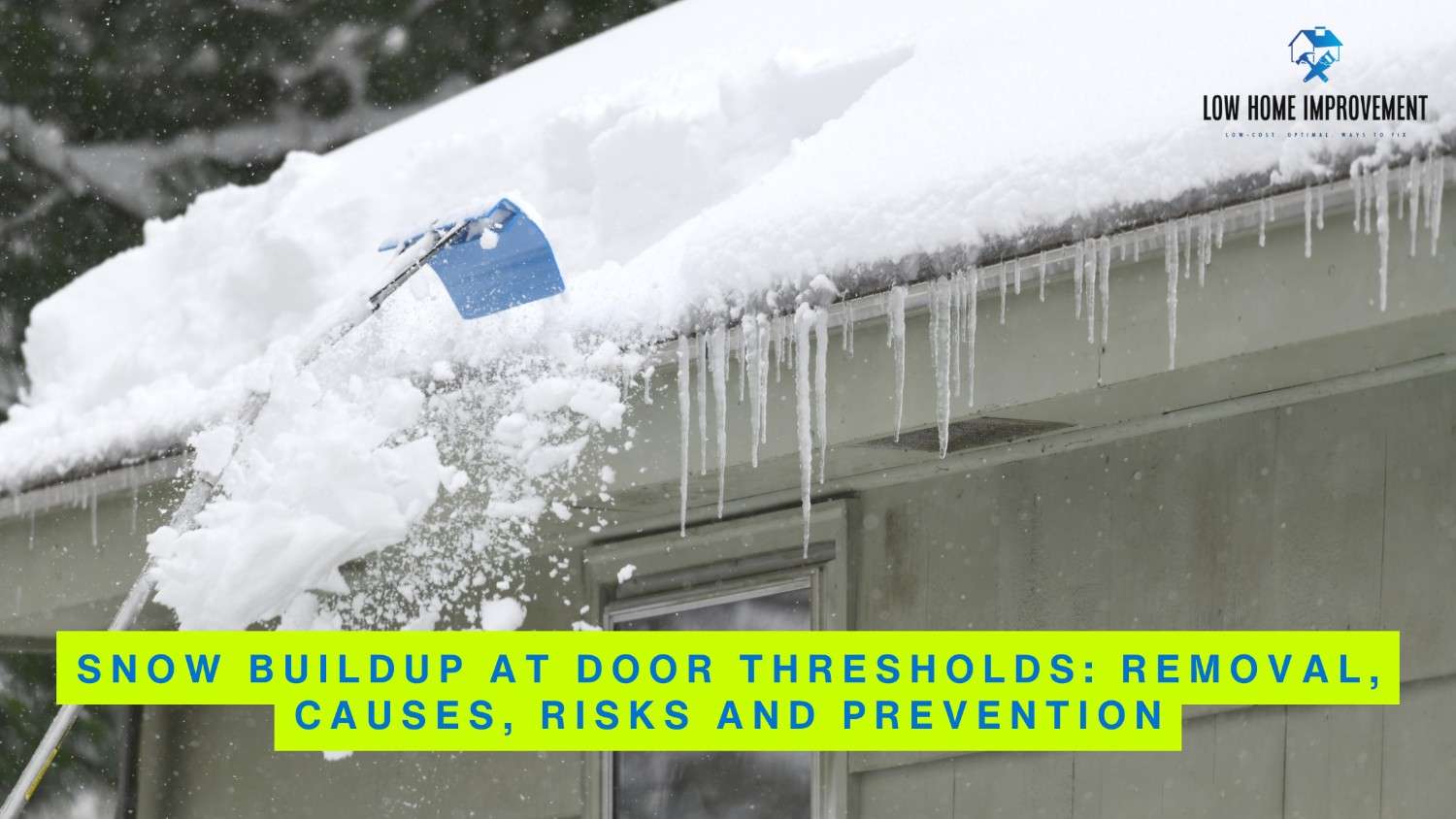
Snow piling up around your doorway is one of the most frustrating winter headaches homeowners face. One moment your steps and entry are clear, and the next, a mound of snow sits packed against your threshold.
Snow accumulation at doorways can block doors from opening, create slippery walking surfaces, contribute to ice formation, and even trap people inside during storms.
Beyond inconvenience, snow buildup at thresholds can lead to safety hazards, property damage, and accessibility issues for elderly residents, children, and delivery or emergency services.
In this comprehensive guide, you will learn what causes snow buildup on the ground at a threshold, why it becomes a recurring problem, the different types of snow accumulation, and the risks associated with it.
More importantly, you’ll discover practical, actionable solutions to prevent, remove, and manage snow buildup effectively.
Whether you’re looking for quick DIY fixes, seasonal preparation strategies, or long-term innovations like heated entry mats, this guide covers it all so you can keep your entryway safe, dry, and accessible all winter long.
What Causes Snow Buildup at Door Thresholds?
| Cause Type | Specific Cause | How It Leads to Buildup |
|---|---|---|
| Natural | Heavy snowfall | Rapid accumulation around doors |
| Natural | Wind-driven drifting | Snow deposits in recessed entry areas |
| Natural | Roof snow shedding | Snow falls directly in front of doors |
| Design | Door on windward side | More exposure to drifting snow |
| Design | Poor threshold slope | Water collects and freezes |
| Maintenance | Infrequent shoveling | Compacted snowpack forms |
| Drainage | Blocked gutters | Meltwater freezes at entrance |
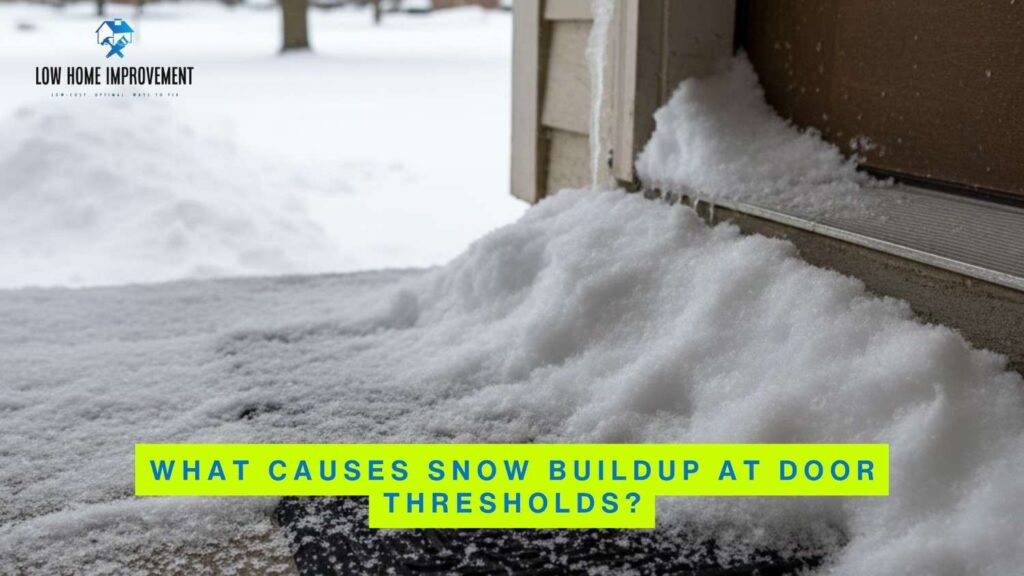
Snow accumulation at a doorway or snow drift at a threshold doesn’t happen by accident. It is usually the result of a combination of natural weather forces and human design factors.
Understanding the root cause helps you choose the right prevention strategy instead of constantly reacting with emergency shoveling.
Natural Causes of Snow Accumulation
Natural factors play the biggest role in winter snow behavior around buildings.
Snowfall intensity and patterns
Heavy snowfall over a short period can overwhelm entryways before you have time to clear them. Lake-effect snow, mountain snow squalls, and blizzards are common culprits.
Long-duration light snowfall can be just as problematic because snow compacts and bonds to the threshold over time, creating dense snowpack near the threshold that becomes stubborn to remove.
Wind-driven snow drift formation
Wind doesn’t just blow snow around randomly; it sculpts it. When wind hits a building, it slows down, dropping snow in eddies and low-pressure pockets.
Doorways are recessed and naturally sheltered, making them perfect traps for wind-driven drift accumulation. This is why you may wake up to find your door blocked by snow even though the surrounding yard appears bare.
Roof overhang and building layout impact
Your roof and architectural layout influence where snow falls and lands. A sloped roof may shed snow directly in front of entry points, forming a snow berm at the doorway.
Valleys, gutters, and unchanneled runoff allow meltwater to drip down and refreeze at the threshold. Narrow entry alcoves with side walls increase turbulence, encouraging snow to swirl and settle right by the door.
Human Factors Contributing to Snow Buildup
Human design choices often unintentionally create snow problems.
Door placement and threshold design
Doors located on the windward side of the home receive more drifting snow. Flush thresholds without proper slope allow snow and water to rest directly against door frames. Low clearances cause snow to wedge under the door sweep, preventing closure or creating air leaks.
Inadequate winter maintenance
Skipping regular snow removal lets snow compress and refreeze into ice. When snow is allowed to build layer upon layer near thresholds, it transforms into a stubborn snowpack that expands against the doorway. Neglecting roof snow or gutters contributes to dripping meltwater that later turns into threshold ice.
Improper drainage at entryway
If the ground near your door slopes toward the building rather than away, meltwater pools instead of draining. When temperatures drop, the pooled water freezes into hazardous ice sheets. Poor grading, clogged drains, and missing downspout extensions all worsen this problem.
Understanding Different Types of Snow Buildup
| Type of Buildup | Description | Risk Level | Common Location |
|---|---|---|---|
| Snow drift | Wind-blown, sculpted piles | High | Recessed doors |
| Snow berm | Piled snow from plowing | Medium–High | Garages & walkways |
| Powder snow | Fresh, fluffy snow | Low | Steps and porches |
| Compacted snowpack | Stepped-on or compressed snow | High | Entry threshold |
| Ice layer | Melted and refrozen snow | Very High | Door sill and steps |
Snow is not all the same. The type of threshold snow accumulation you experience determines the right management strategy. Some are caused by wind, some by plowing, and some by freezing and thawing cycles.
Snow Drift at Threshold
A snow drift at the threshold forms when strong winds carry loose snow and deposit it where wind speed drops—often right at recessed entrances.
Drifts usually appear sculpted, smooth, and packed. They can grow several feet tall and may repeatedly reform even after removal.
Homeowners often notice snow piled inside storm doors or directly against the main entry. Though visually appealing in photos, drifts block access and can push against door seals.
Snow Berm and Piled Snow
A snow berm at a doorway is different from a drift. Berms usually form from plowed or shoveled snow pushed aside and unintentionally piled near entryways or garages. As snow piles stack higher, they slowly slump and creep toward thresholds.
Common berm locations include:
- driveway edges near garage doors
- front steps
- along walkways near porch entrances
Berms often freeze solid and become icy obstacles that are difficult to chip away later.
Icy Snow Accumulation
Icy thresholds occur when snow melts and refreezes—often repeatedly. The process looks like this:
- Sun or indoor heat melts snow near the door
- Water runs downward and pools
- Night temperatures drop
- Ice forms directly on the threshold
This creates extremely dangerous conditions because the ice is nearly invisible. Slippery thresholds lead to falls and can also freeze doors shut.
Risks and Problems of Snow Buildup
Snow buildup at thresholds causes far more than minor annoyance. It brings health, safety, and financial consequences.
Safety Hazards
Slippery threshold due to snow is one of the leading causes of winter slips and falls. Even a thin layer of compacted snow can behave like polished ice. Elderly individuals and young children are especially vulnerable.
Another serious risk occurs when a door becomes blocked by snow. A frozen or obstructed door can prevent emergency exit during:
- house fires
- medical emergencies
- gas leaks
Heavy buildup can also trap residents inside until someone clears it from the outside.
Property Damage
When threshold snow melts and leaks inside, it can soak flooring, subflooring, and carpeting. Repeated moisture exposure leads to rot and mold.
Wood door frames swell and warp, making closing difficult. Metal thresholds corrode, and sealants break down.
Ice jacking is another risk: freezing water expands inside cracks, forcing them wider and causing structural harm over time.
Accessibility Issues
Snow obstruction at thresholds creates access barriers. Those affected include:
- wheelchair users
- delivery drivers
- service workers
- firefighters or paramedics
Inaccessible entryways quickly become safety code violations in rental or commercial settings.
How to Clear/Remove Light Snow Buildup on the Ground at a Threshold
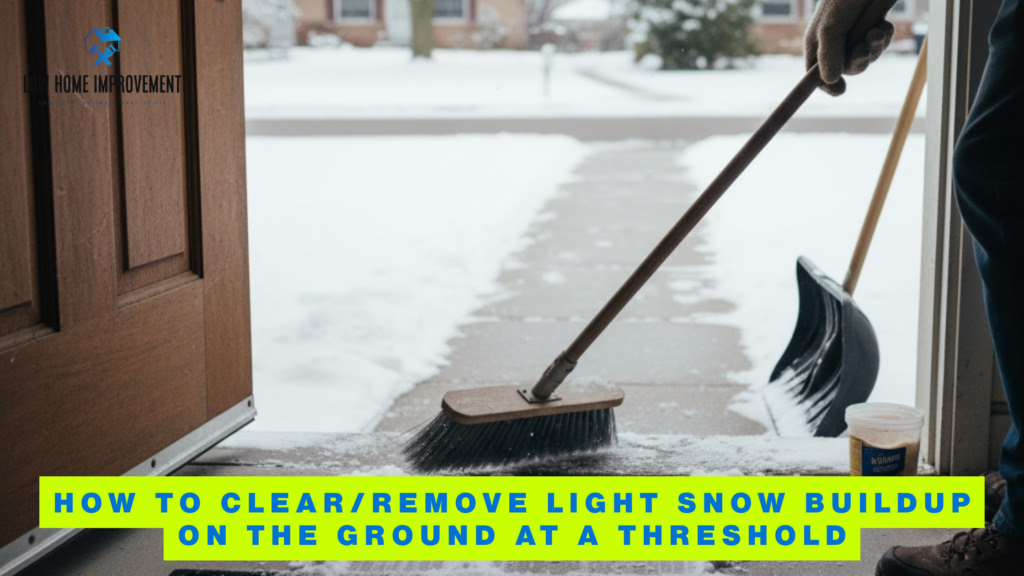
When snow accumulation at the doorway is still fresh and fluffy, clearing it early prevents it from compacting into hard snowpack.
Start by using a broom or snow brush to sweep snow away from the door and threshold before it has time to melt and refreeze.
Work from the threshold outward rather than pushing snow toward the doorway, which prevents accidental pileup against the door frame.
If a thin layer remains, a plastic shovel can help scrape without scratching metal or wood thresholds.
For added safety, spread sand or traction grit to reduce slipping. Avoid hot water — it melts snow temporarily but quickly refreezes into ice.
Clearing light snow regularly is the easiest way to prevent doors from becoming blocked by snow or frozen shut during colder nighttime temperatures.
How to Remove Packed or Drifted Snow at the Doorway
Snow drift at a threshold or compact snow buildup requires a bit more effort. Begin by breaking the top crust with the edge of a shovel so the deeper snow loosens.
Remove snow in layers rather than trying to lift heavy chunks at once — this helps prevent back strain and reduces damage to the threshold.
If snow has drifted directly against the door, open it slowly, clearing small sections at a time to avoid forcing the hinges or bending the door frame.
For large accumulation, a small snow blower can clear the approach area while hand tools finish the space directly at the doorway.
If the snow is frozen solid, apply de-icer or eco-friendly ice melt along edges to soften it before shoveling. Once cleared, brush remaining snow away so meltwater does not run toward the entry.
How to Clear Ice and Refrozen Snow at a Threshold Safely
Icy snow buildup is the most dangerous form because it creates a slippery threshold and can freeze doors shut. Never chip ice aggressively at the door frame — this can crack wood, scratch finishes, and damage weatherstripping.
Instead, sprinkle de-icing pellets, pet-safe ice melt, or calcium magnesium acetate along the threshold and allow time for it to penetrate. Once softened, use a scraper or flat shovel to lift the loosened ice.
To reduce future icy buildup, place a heavy-duty outdoor mat at the entry and ensure the ground slopes away from the door so meltwater doesn’t pool and refreeze.
Heated mats are also highly effective if icy thresholds are a frequent winter problem. After clearing, dry the area as much as possible to prevent another refreeze cycle overnight.
How to Prevent Snow Buildup at Your Threshold
Preventing snow buildup is far easier than constantly clearing it. With a combination of physical barriers, maintenance habits, and design improvements, you can dramatically reduce winter entry problems.
Simple Preventive Measures
Install door sweeps and mats
Door sweeps reduce drafts and stop powdery snow from blowing under the door. Indoor and outdoor mats absorb moisture and provide traction to prevent slips.
Use snow guards or barriers
Snow guards on roofs keep snow from sliding off in heavy sheets onto entryways. Small threshold barriers or boot scrapers divert foot-carried snow away from the doorway.
Proper roof and drainage setup
Ensure gutters drain away from entrances. Add downspout extensions to lead meltwater safely away. Check overhang drip lines to confirm they don’t target your steps.
Seasonal Preparation Tips
Pre-winter inspection
Before snow season:
- check thresholds for rot or air leaks
- seal cracks and gaps
- make sure entry lighting is working
Fixing these issues early reduces winter hazards.
Anti-slip and heated mats
High-traction outdoor mats reduce fall risk instantly. Electric heated mats actively melt snow and ice, keeping the threshold clear without constant shoveling.
Windbreak installation
Temporary panels, shrubs, or decorative fencing reduce wind velocity near the door, preventing drifts from forming.
DIY Techniques
Sand, salt, and eco-friendly ice melts
Sand improves traction but doesn’t melt ice. Salt melts ice but can damage concrete and vegetation. Pet-safe and plant-safe alternatives like calcium magnesium acetate reduce harm.
Snow removal tools and tips
Keep a flat shovel or snow brush near each exterior door. Remove fresh snow frequently—lighter work prevents buildup.
Short-term snow drift management
Kick holes in drifts to disrupt wind patterns temporarily. Removing the drift edge often prevents it from rebuilding rapidly.
How to Remove Snow from Door Thresholds
Even with prevention, snow sometimes wins. Safe removal is essential.
Tools and Equipment You Need
| Tool | Best For | Advantages | Notes |
|---|---|---|---|
| Snow shovel | Heavy snow buildup | Affordable, effective | Avoid metal on wood |
| Snow pusher | Light snowfalls | Fast clearing | Less effective on ice |
| Snow blower | Deep accumulations | Saves time | Not for tight thresholds |
| Ice scraper | Thin ice layers | Precise removal | Use gently |
| Broom/brush | Fresh powder snow | Prevents compaction | Works best early |
| Heated mat | Ongoing melting | Low effort | Requires power access |
- ergonomic snow shovel
- snow brush or broom
- ice scraper
- snow blower (for heavy accumulation)
- snow melting mats or de-icing pellets
Store tools near your entrance—not buried in the garage behind snow.
See also How to Start Home Renovations HomeNumental
Eco-Friendly Ice Melt Alternatives
| Product | Works Best For | Benefits | Caution |
|---|---|---|---|
| Sand | Traction | Pet & plant safe | Does not melt ice |
| Kitty litter | Traction | Easy to find | Becomes messy when wet |
| Coffee grounds | Light ice | Adds grip | Can stain surfaces |
| Beet juice mixtures | Ice melting | Effective in cold temps | May attract animals |
| Calcium magnesium acetate | Ice prevention | Less corrosive | Higher cost |
Step-by-Step Snow Removal Guide
- Clear large snow piles first
Remove piled or drifted snow surrounding the entrance. - Expose the threshold
Chip snow away gently to avoid damaging metal or wood. - Apply anti-slip agents
Lay down sand or ice melt for traction. - Remove meltwater
Sweep away slush before it refreezes. - Maintain a dry threshold
Use mats and periodic brushing during storms.
Consistency is key; frequent light clearing beats heavy, infrequent shoveling.
Safety Tips During Snow Removal
| Safety Tip | Why It Matters |
|---|---|
| Lift with knees, not back | Prevents injury |
| Take frequent breaks | Avoids overexertion |
| Wear insulated gloves | Protects from frostbite |
| Use anti-slip boots | Reduces fall risk |
| Watch for roof snow | Prevents impact accidents |
| Don’t overuse salt | Prevents surface damage |
- bend your knees and lift with legs to avoid back injuries
- take breaks to prevent overexertion
- wear insulated gloves and anti-slip boots
- avoid overusing chemical ice melts that damage surfaces and soil
Stay alert for falling roof snow when working close to structures.
See also Balanced Beige vs Accessible Beige
Long-Term Solutions and Innovations
For chronic snow buildup problems, permanent design upgrades may be worth the investment.
Heated Entryways and Threshold Mats
Radiant heat systems melt snow automatically, preventing accumulation entirely. They are ideal for:
- high-traffic homes
- elderly or disabled residents
- harsh climate zones
Heated mats are simpler plug-in alternatives that don’t require renovation.
Snow Barrier Installation
Strategically placed wind barriers reduce drifting snow at entry doors. Options include:
- lattice fences
- evergreen hedges
- removable seasonal screens
They break up wind flow, preventing snow eddies near the threshold.
Professional Help and Winter Maintenance Services
Snow removal companies offer:
- storm monitoring
- priority plowing
- de-icing service
- roof clearing
Hiring professionals is recommended when snow load near entry becomes unmanageable, or when health conditions limit self-removal capability.
See also Can You Paint Shingles
Short-Term vs Long-Term Snow Buildup Solutions
| Solution Type | Examples | Cost Level | Maintenance |
|---|---|---|---|
| Short-term | Shoveling, brooms, ice melt | Low | Ongoing effort |
| Seasonal | Windbreaks, mats, door sweeps | Medium | Moderate upkeep |
| Long-term | Heated entryway, redesign slope, drainage fixes | High | Minimal effort after install |
Frequently Asked Questions
Why does snow accumulate more at my doorway than other areas?
Doorways create pockets where wind slows down, causing drifting. Overhangs shed snow onto the threshold. Poor drainage or grading also encourages accumulation.
How can I prevent icy thresholds during winter?
Keep the threshold dry, use heated mats, improve drainage slope, apply traction grit, and remove snow before it melts and refreezes.
What is a snow drift vs. a snow berm?
A snow drift forms naturally due to wind patterns. A snow berm is built up snow from plowing or shoveling that piles and hardens near walkways or doors.
Are heated mats effective for threshold snow?
Yes—heated mats are one of the most effective, low-maintenance methods for preventing ice and snow buildup at entrances.
How often should I remove snow from my doorstep?
Remove it as soon as possible after each snowfall. Frequent clearing prevents compacted snowpack and avoids ice formation.
Conclusion
Snow buildup at thresholds is more than a winter nuisance—it is a safety risk, a cause of property damage, and a barrier to accessibility. It results from a mix of snowfall intensity, wind drift, roof shedding, and entryway design factors.
Understanding whether you are dealing with drifts, berms, or icy accumulation helps you choose the right prevention and removal strategy.
By combining proactive measures—such as windbreaks, heated mats, door sweeps, and regular maintenance—you can significantly reduce winter entryway problems.
When snow does accumulate, using the right tools and safe removal methods keeps your thresholds clear without risking injury.
Make winter threshold care part of your seasonal routine. Small, consistent actions will keep your home accessible, safe, and comfortable all season long.
