

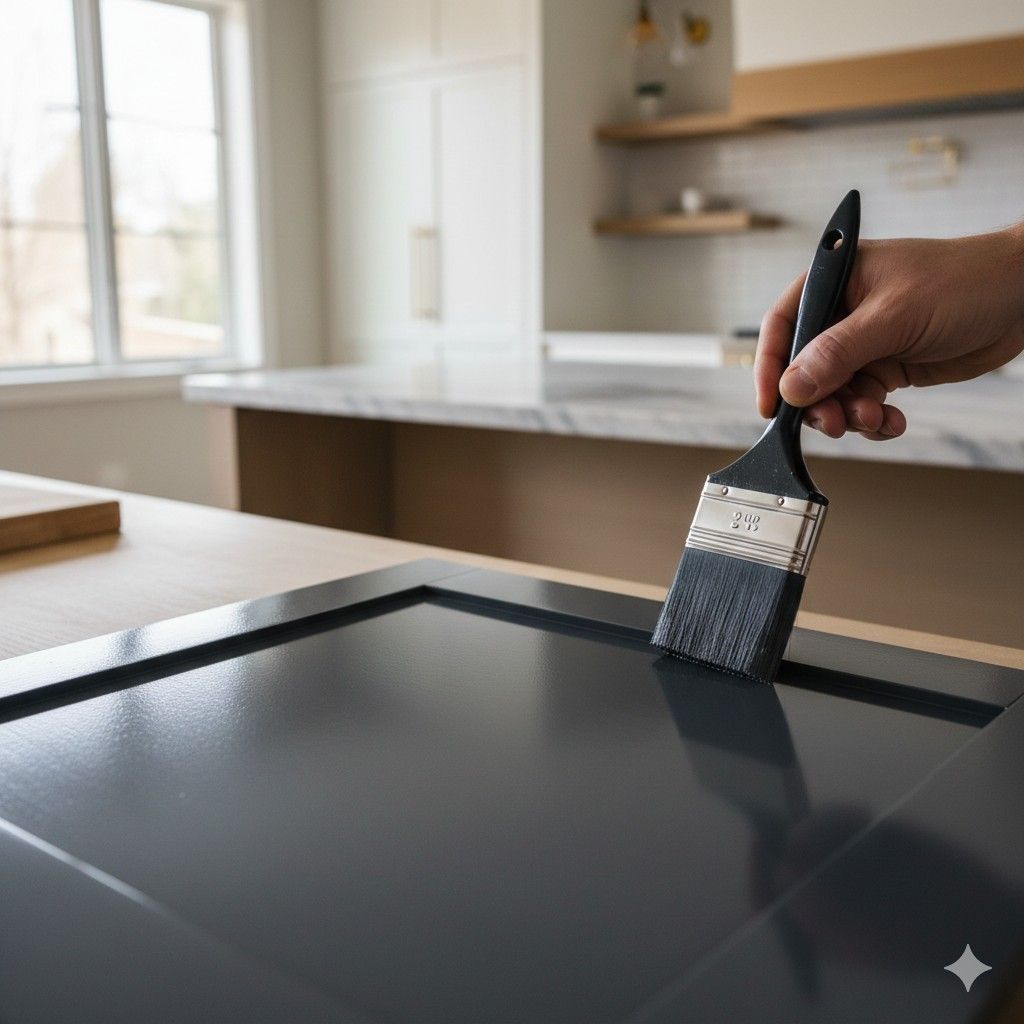
When it comes to painting kitchen cabinets, selecting the right tools is just as important as choosing the paint itself. While paint sprayers are often a go-to for quick and even coverage, paint brushes remain essential for detailed work and achieving a flawless finish on kitchen cabinets. The best paint brush for kitchen cabinets can make a huge difference in the final result, ensuring smooth surfaces without streaks, brush marks, or uneven coverage.
In this guide, we’ll take you through everything you need to know about selecting the best paint brush for kitchen cabinets, from bristle types to handle designs, and provide expert recommendations on the top brushes that will help you achieve a professional, smooth finish. Whether you’re a DIY enthusiast or a seasoned professional, this guide will equip you with the knowledge needed to make your kitchen cabinet painting project a success.
Why is the Right Paint Brush Important for Kitchen Cabinets?
Selecting the right paint brush for kitchen cabinets is crucial because it directly affects the quality of the finish. While you might be tempted to use any brush that’s lying around, using the wrong brush can lead to unsightly streaks, uneven coverage, and poor paint adhesion. Here’s why the right brush matters:
- Achieving a Smooth Finish: The right brush allows you to apply the paint smoothly and evenly without leaving visible brush strokes or roller marks.
- Precision and Control: Kitchen cabinets, especially with intricate details, require precision. A good brush provides better control for detailed work, such as corners, edges, and molding.
- Long-Lasting Results: High-quality brushes ensure that the paint adheres properly, resulting in a durable finish that will stand up to moisture, grease, and everyday use in the kitchen.
- Efficiency: A high-quality brush applies paint more efficiently, saving time and reducing the number of coats needed for full coverage.
Top Features to Look for in a Paint Brush for Kitchen Cabinets
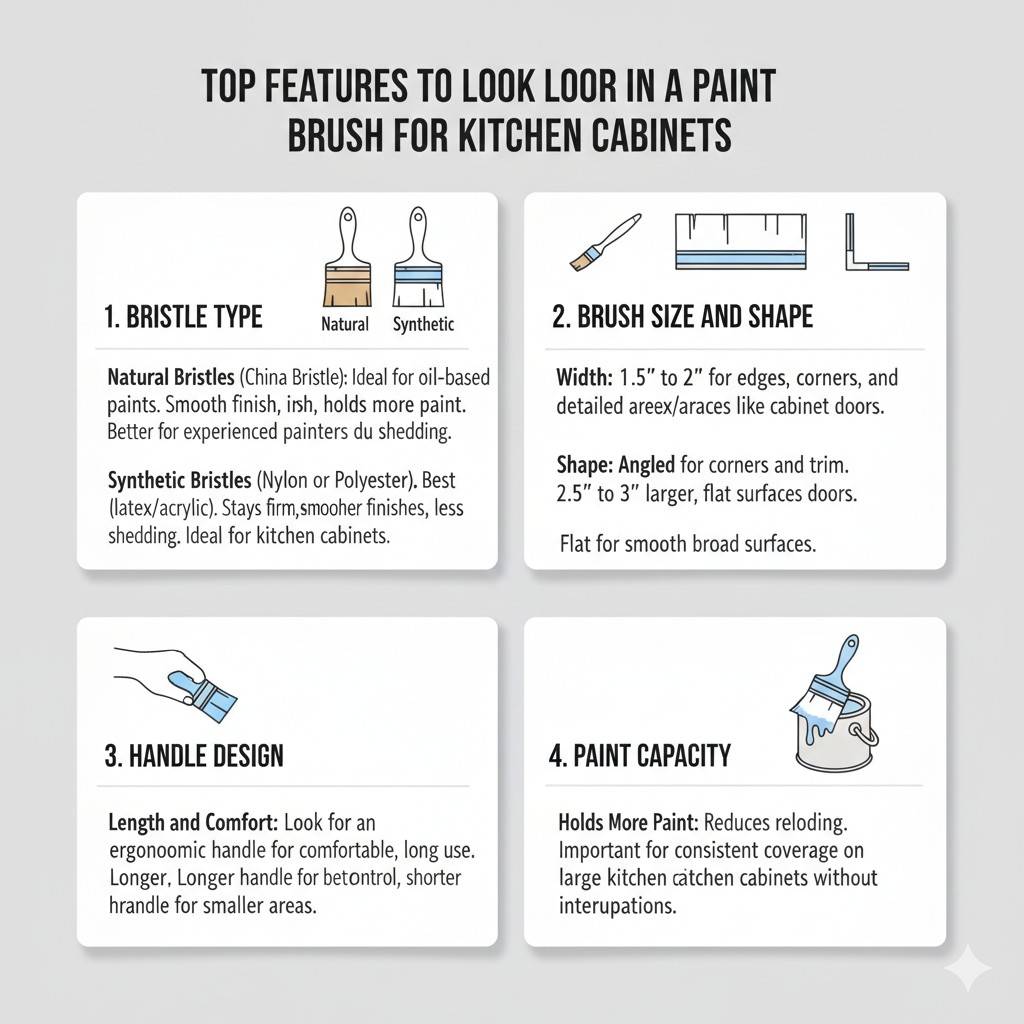
Before we dive into our top paint brush recommendations, it’s important to understand the features that make a brush well-suited for painting kitchen cabinets. The best brush for your project should have:
1. Bristle Type
The bristles of your brush play a critical role in how the paint applies and how smooth the finish will be. There are two main types of bristles used for painting:
- Natural Bristles (China Bristle): These are ideal for oil-based paints and give a smooth finish. They hold more paint, which helps in achieving an even application. However, they tend to shed over time, so they’re better for experienced painters.
- Synthetic Bristles (Nylon or Polyester): These are the best option for water-based paints (like latex or acrylic), as they don’t absorb water and stay firm. Synthetic brushes also provide smoother finishes with less shedding, making them ideal for kitchen cabinets.
2. Brush Size and Shape
- Width: A narrower brush (1.5” to 2” wide) is perfect for painting edges, corners, and detailed areas, while a wider brush (2.5” to 3” wide) is better for larger, flat surfaces like cabinet doors.
- Shape: Angled brushes are great for corners and trim, while flat brushes are ideal for smooth, broad surfaces.
3. Handle Design
- Length and Comfort: Look for a brush with a comfortable, ergonomic handle that allows you to hold it for longer periods without strain. A longer handle provides better control for large surfaces, but a shorter handle might be more convenient for smaller areas.
4. Paint Capacity
Some brushes are designed to hold more paint, which means you won’t need to reload the brush as often. This is especially important when painting large kitchen cabinets as it helps you maintain consistent coverage without interruptions.
Best Paint Brushes for Kitchen Cabinets (DIY & Professional Options)
Now that we know what to look for in a brush, let’s explore some of the best paint brushes for kitchen cabinets. Whether you’re a DIY enthusiast or a professional, these options will help you achieve a smooth, flawless finish.
1. Purdy 144400340 XL Series
Best For: High-quality results with a smooth finish for DIYers and professionals.
Why Choose It?
The Purdy XL Series is one of the most popular professional brushes, known for its durability, smooth application, and consistent results. This brush features a blend of nylon and polyester bristles, making it perfect for latex paints and providing a flawless finish on kitchen cabinets. Its angled shape allows for precise edge work, while the comfortable handle provides excellent control.
Key Features:
- Synthetic Bristles: Nylon and polyester blend for smooth, even coverage with water-based paints.
- Angled Brush Shape: Ideal for detailed work and edges.
- Durability: Built to last through multiple painting projects.
- Ergonomic Handle: Offers comfort during long painting sessions.
Table 1: Comparison of Best Paint Brushes for Kitchen Cabinets
| Paint Brush | Best For | Bristle Type | Key Features | Price Range |
|---|---|---|---|---|
| Purdy XL Series | DIYers and professionals | Synthetic (Nylon/Polyester) | Smooth finish, angled for precision | $19.00 |
| Wooster Silver Tip | Fine finish for cabinets | Synthetic (Nylon/Polyester) | Excellent coverage, durable bristles | US$12.99 |
| Benjamin Moore 3” Cabinet Brush | Professional, high-precision | Synthetic (Nylon) | High-quality finish, ergonomic handle | $38.03 |
| Purdy ClearCut Angular Trim | Trim work, edges, detail work | Synthetic (Nylon/Polyester) | Angular for easy precision cutting | US$25.48 |
2. Wooster Silver Tip 2.5” Angle Sash Brush
Best For: Smooth, high-quality finishes with precision.
Why Choose It?
The Wooster Silver Tip is another excellent choice for achieving a smooth, high-end finish on kitchen cabinets. Its angle sash design allows for precise cutting in edges and corners. The synthetic bristles provide even paint distribution, while the lifetime guarantee ensures this brush will last for many projects.
Key Features:
- Synthetic Bristles: Perfect for water-based paints and coatings.
- Angle Sash Design: Ideal for precision work on edges and trim.
- Durability: Designed for repeated use, providing excellent paint control.
- Comfortable Handle: Ergonomically designed for long painting sessions.
3. Benjamin Moore 3” Cabinet Brush
Best For: Professional-grade, high-precision applications.
Why Choose It?
The Benjamin Moore 3” Cabinet Brush is an ideal choice for professional painters or serious DIYers looking for a high-precision finish. Its synthetic bristles are designed to handle latex paints, and its size makes it perfect for both large cabinet surfaces and intricate trim work.
Key Features:
- Synthetic Bristles: Provides a smooth, even finish with latex paint.
- Ergonomic Handle: Comfortable grip, perfect for extended use.
- High-Precision: Perfect for cabinets, trim, and detailed work.
- Durability: Designed for heavy-duty use and consistent results.
4. Purdy ClearCut Angular Trim Brush
Best For: Detail work and trim around cabinets.
Why Choose It?
The Purdy ClearCut Angular Trim Brush is an excellent choice for detail work around cabinet edges and trim. Its angular shape is perfect for getting into tight corners and providing crisp, clean lines. The brush’s synthetic bristles ensure smooth, even coverage, while the comfortable grip helps you maintain control over precision painting.
Key Features:
- Angled Bristles: Provides precision for detail work and trim.
- Synthetic Bristles: Smooth, even application with water-based paints.
- Comfortable Grip: Designed to minimize hand fatigue during extended painting sessions.
- Durable: Built to withstand regular use and maintain a high-quality finish.
See also Best Behr Paint for Kitchen Cabinets
How to Achieve a Smooth Finish on Kitchen Cabinets with a Paint Brush
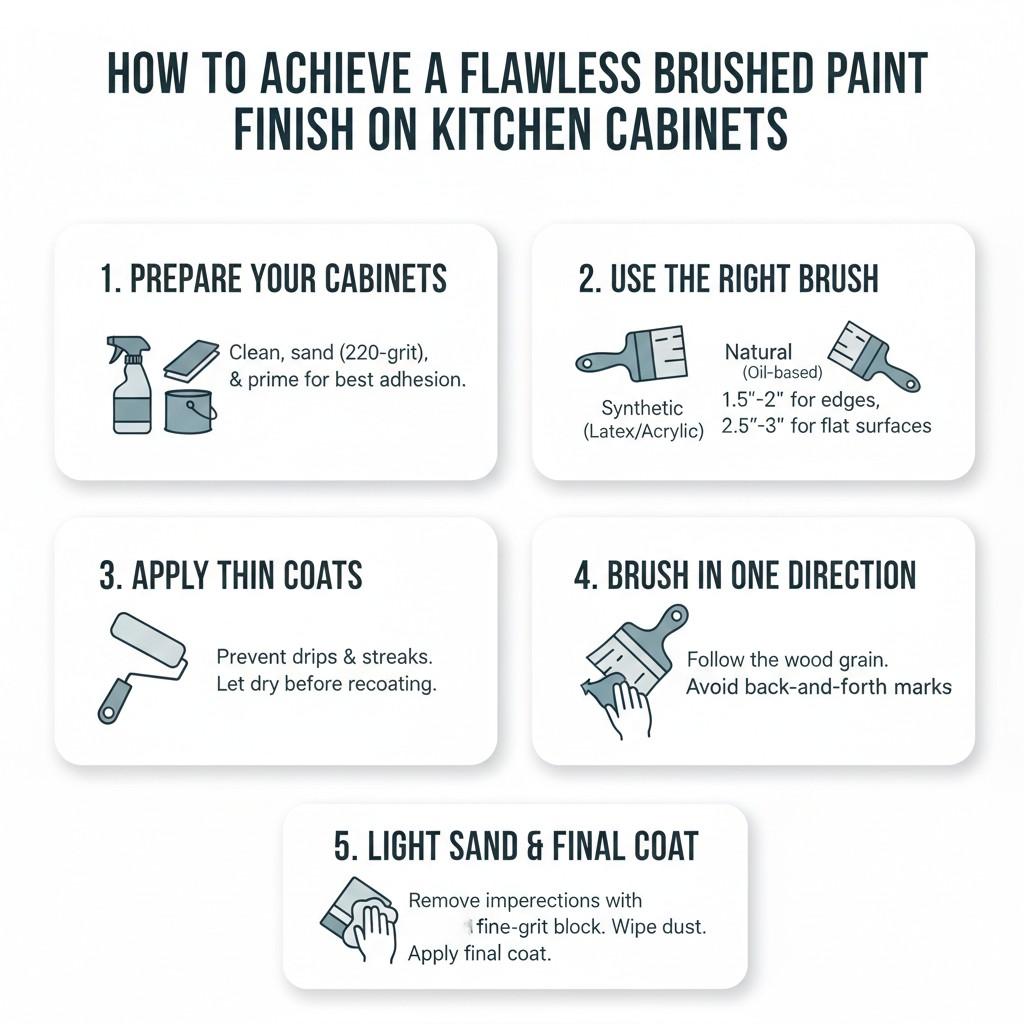
Achieving a smooth finish on kitchen cabinets is all about technique and using the right tools. Here are some expert tips for getting a flawless finish with your chosen paint brush:
1. Prepare Your Cabinets
Before you start painting, ensure that your cabinets are clean, sanded, and primed. A well-prepared surface will help the paint adhere better and create a smoother finish.
- Clean the Surface: Remove grease, grime, and dirt using a degreaser or all-purpose cleaner.
- Sand the Cabinets: Lightly sand the surfaces to create a rough texture for the paint to grip onto. Use fine-grit sandpaper (220-grit) to avoid damaging the wood.
- Prime the Cabinets: Apply a primer designed for cabinets to ensure the paint adheres properly and provides a more durable finish.
2. Use the Right Brush
Select a synthetic brush for latex paints and natural bristles for oil-based paints. The size of the brush should match the area you’re painting. Use a 2.5” to 3” brush for large cabinet surfaces and a 1.5” or 2” brush for trim and edges.
3. Apply Thin Coats
Avoid applying too much paint at once. Start with a thin coat and let it dry before applying a second coat. This will prevent drips and streaks, ensuring a smooth finish.
4. Brush in the Same Direction
To get a smooth and even finish, always brush in the direction of the wood grain or along the edges of your cabinets. Avoid back-and-forth motion, as this can cause streaks and brush marks.
5. Finish with a Light Sanding
After the paint has dried, lightly sand the surface with a fine-grit sanding block to remove any brush strokes or imperfections. Wipe away the dust with a clean, dry cloth before applying a final coat.
Conclusion
Choosing the best paint brush for kitchen cabinets is crucial for achieving a smooth, professional finish. Whether you’re a DIY enthusiast or a professional painter, using the right brush can make a huge difference in the outcome of your project. From the Purdy XL Series for DIYers to the Benjamin Moore 3” Cabinet Brush for professionals, the options available ensure that you get the best results for your kitchen cabinets.
Remember, preparation is key to achieving a flawless finish, and the right brush is a critical part of that process. Invest in a high-quality brush, and take your time with each step to ensure a smooth, long-lasting finish that will elevate the look of your kitchen.
Ready to start your kitchen cabinet makeover? Choose the perfect paint brush for your project and transform your cabinets into a beautiful, professional-looking feature in your kitchen.
Looking for more tips on kitchen makeovers and painting techniques? Subscribe to our newsletter for expert advice, product recommendations, and more!
FAQs
- What’s the best paint brush for kitchen cabinets? The Purdy XL Series and Wooster Silver Tip are two of the best brushes for achieving a smooth finish on kitchen cabinets.
- Can I use a roller instead of a paintbrush for kitchen cabinets? While rollers can cover large areas quickly, a paint brush is better for precision work, especially on cabinet doors and trim.
- What size paintbrush is best for kitchen cabinets? A 2.5” to 3” brush is ideal for large cabinet surfaces, while a 1.5” to 2” brush is better for trim and edges.
- How do I get a smooth finish on kitchen cabinets? Use a high-quality synthetic paintbrush, apply thin coats, sand between coats, and brush in the direction of the wood grain to avoid streaks.
- Should I use natural or synthetic bristles for kitchen cabinets? Use synthetic bristles for water-based paints (latex) and natural bristles for oil-based paints for the best results.
- How do I clean my paintbrush after painting cabinets? Use warm water and mild soap for cleaning synthetic brushes used with latex paints. For oil-based paints, use mineral spirits.
- Can I use a paintbrush for both cabinet doors and the cabinet boxes? Yes, a brush is ideal for both, but use a larger brush for flat areas and a smaller brush for detailed areas.
- What is the best finish for kitchen cabinets? A semi-gloss or satin finish is recommended for cabinets because it’s durable and easy to clean.
- How many coats should I apply on kitchen cabinets? Two to three coats are typically sufficient for a smooth and durable finish, depending on the color and paint coverage.
- Can I use a paintbrush for kitchen cabinet trim? Yes, an angled paintbrush is perfect for trim work, allowing you to paint edges and corners with precision.
