

If you’ve ever stood in your kitchen holding a bottle of Pine-Sol and wondered, “Can you use Pine-Sol on wood floors?”—you’re not alone. It’s one of the most searched questions when it comes to household cleaning. Pine-Sol is affordable, powerful, and smells unmistakably clean. But wood floors? They’re a different beast altogether.
Wood floors are like skin—they look tough on the surface, but one wrong product can dry them out, dull their shine, or even cause long-term damage. The short answer is yes, you can use Pine-Sol on wood floors, but only if you do it the right way. This guide breaks everything down clearly, safely, and practically—no guesswork, no fluff.
Let’s dive in.
Can You Use Pine-Sol on Wood Floors?
Yes, you can use Pine-Sol on wood floors, but only with caution and proper technique. Pine-Sol is a multi-surface cleaner that is safe for sealed hardwood and engineered wood floors when diluted correctly.
To prevent damage, mix ¼ cup of Pine-Sol per gallon of warm water, mop lightly, and avoid soaking the floor. Using full-strength Pine-Sol or applying it on unfinished, waxed, or softwood floors can strip the finish, leave streaks, or cause discoloration.
Always test a small, inconspicuous area first to ensure compatibility with your floor’s finish. After mopping, dry the floor immediately with a microfiber cloth or dry mop to prevent water damage and maintain shine.
For best results, sweep or vacuum before cleaning to remove dust and debris. While Pine-Sol can effectively disinfect and clean, homeowners seeking gentler options for delicate finishes may prefer Murphy Oil Soap, Bona Wood Cleaner, or natural solutions like diluted vinegar with essential oils.
Following these precautions ensures your wood floors remain streak-free, safe, and long-lasting, making Pine-Sol a practical choice for routine cleaning when used responsibly.
Is Pine-Sol Safe for Wood Floors?
Pine-Sol and Hardwood Floors
When people ask “is Pine-Sol safe for hardwood floors?”, what they’re really asking is whether it will protect or destroy their investment. Hardwood floors are usually sealed with a protective finish, and that finish is what makes all the difference.
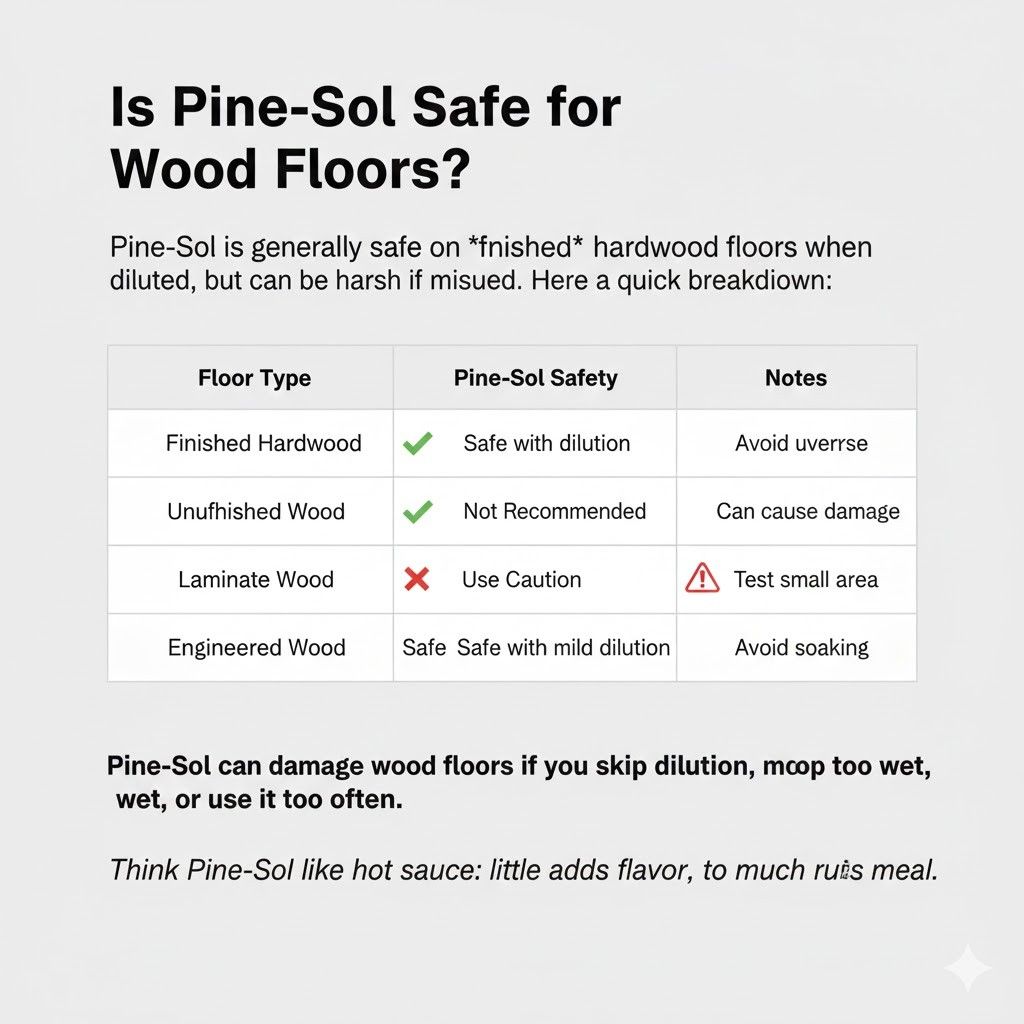
Pine-Sol is an alkaline cleaner, which means it’s great at cutting grease and grime—but harsh if misused. On finished hardwood floors, Pine-Sol is generally safe when diluted properly. On unfinished wood, however, it’s a hard no.
Here’s a quick breakdown:
| Floor Type | Pine-Sol Safety | Notes |
|---|---|---|
| Finished Hardwood | Safe with dilution | Avoid overuse |
| Unfinished Wood | Not recommended | Can cause damage |
| Laminate Wood | Use caution | Test small area |
| Engineered Wood | Safe with mild dilution | Avoid soaking |
So, can Pine-Sol damage wood floors? Yes—if you skip dilution, mop too wet, or use it too often. Think of Pine-Sol like hot sauce: a little adds flavor, too much ruins the meal.
Pine-Sol and Wood Floor Finish
Your floor’s finish is its armor. Polyurethane, waxed, and oiled finishes all react differently to cleaners.
- Polyurethane finishes (most modern floors): Pine-Sol is safe if diluted.
- Waxed floors: Pine-Sol can strip wax and leave dull patches.
- Oiled finishes: Can absorb residue and discolor over time.
Many complaints about Pine-Sol residue on wood floors come from not rinsing properly or using too much product. To avoid streaks, dulling, or haze:
- Use a damp—not wet—mop
- Rinse occasionally with clean water
- Dry immediately with microfiber
How to Use Pine-Sol on Wood Floors
Proper Dilution and Safety
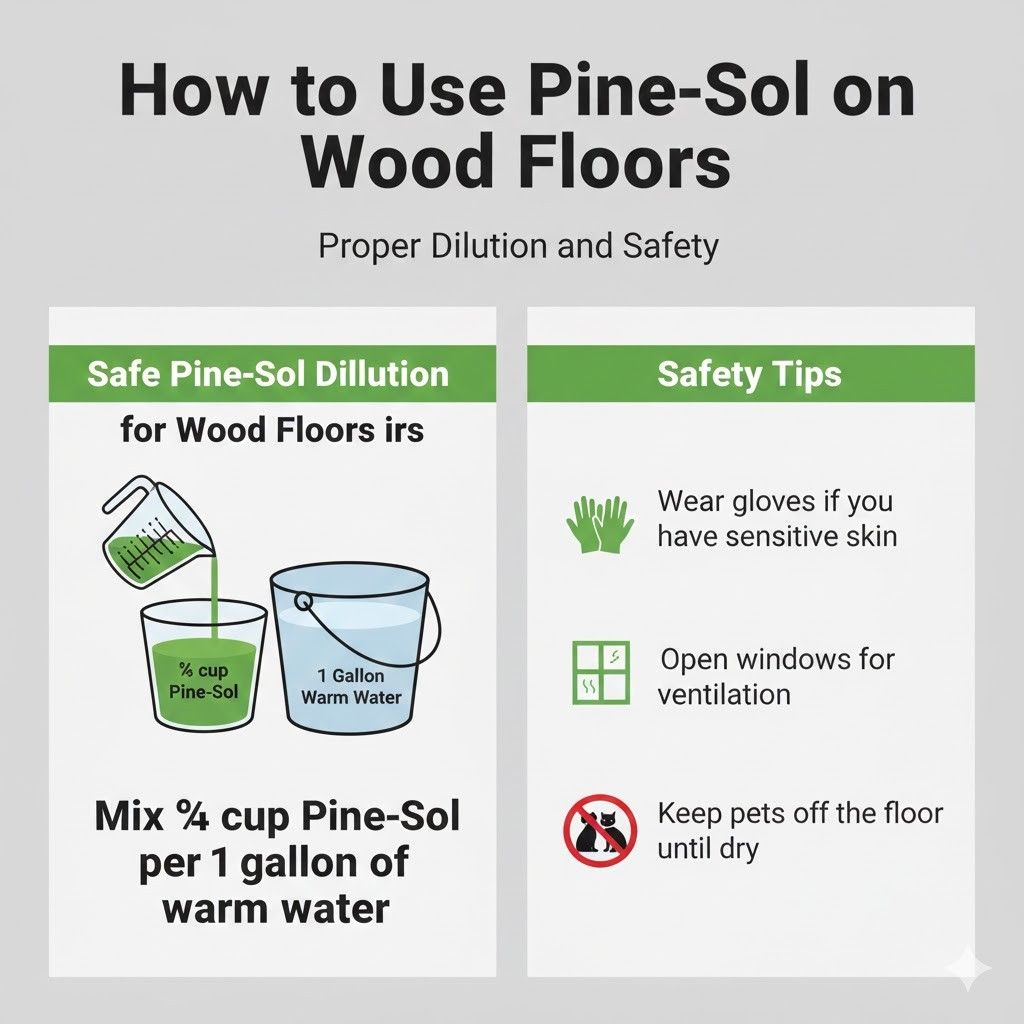
If you remember only one thing, remember this: never use Pine-Sol full strength on wood floors.
Safe Pine-Sol dilution for wood floors:
- Mix ¼ cup Pine-Sol per 1 gallon of warm water
Safety tips:
- Wear gloves if you have sensitive skin
- Open windows for ventilation
- Keep pets off the floor until dry
Using the safe way to use Pine-Sol on wood floors protects both your floors and your lungs.
See also 10×10 Kitchen Remodel
Step-by-Step Cleaning Process
Want to know how to clean wood floors with Pine-Sol without regrets? Follow this exact method:
Pine-Sol wood floor cleaning steps:
- Sweep or vacuum to remove grit
- Prepare diluted solution
- Mop in small sections
- Rinse lightly if needed
- Dry with microfiber cloth
Quick tips:
- Mop with the grain
- Wring mop thoroughly
- Never let water pool
Simple steps, big difference.
Common Mistakes When Using Pine-Sol on Wood Floors
Overuse or Concentration Errors
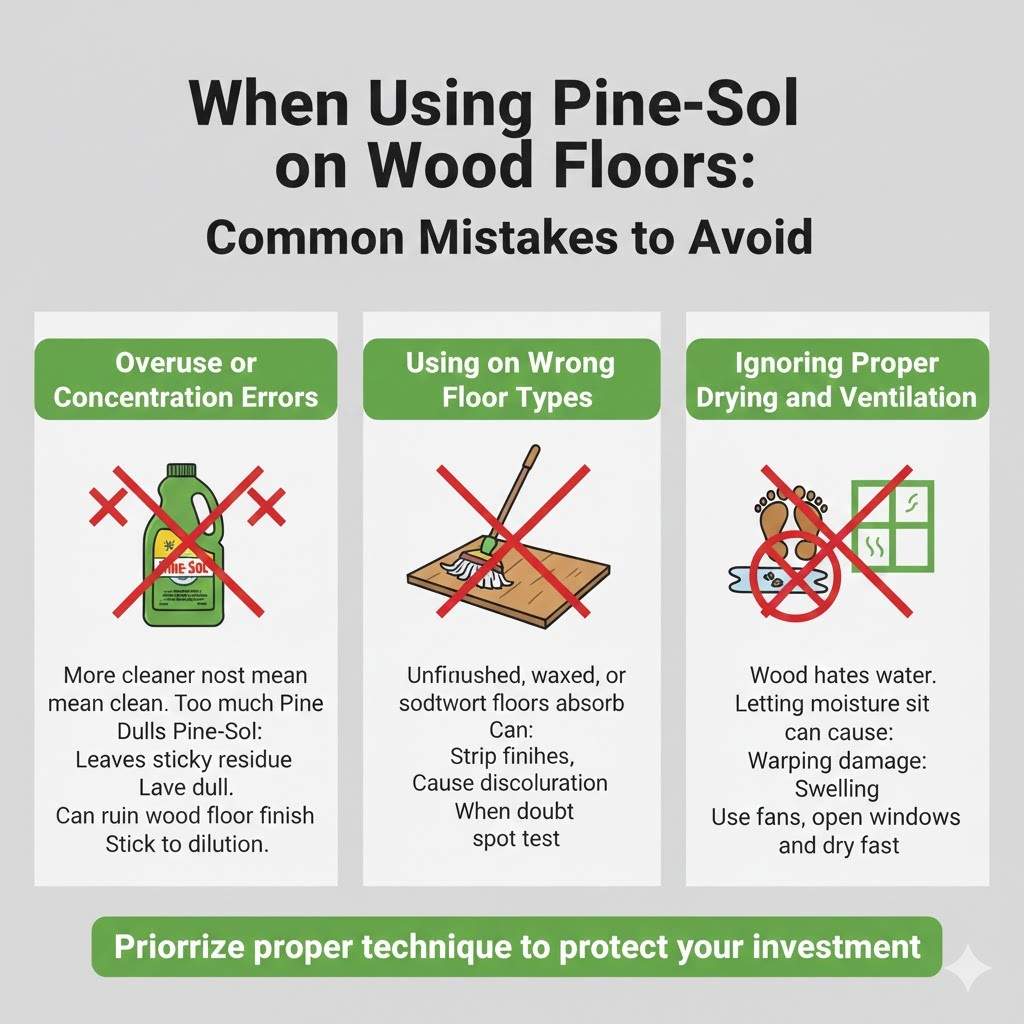
More cleaner does not mean more clean. This is the fastest way to end up Googling “Pine-Sol leaving streaks on wood floors”.
Too much Pine-Sol:
- Dulls shine
- Leaves sticky residue
- Can ruin wood floor finish over time
Stick to dilution. Your floors will thank you.
Using on Wrong Floor Types
Unfinished, waxed, or softwood floors absorb moisture easily. Pine-Sol can:
- Strip finishes
- Cause discoloration
- Leave floors dull after Pine-Sol use
When in doubt, spot test.
Ignoring Proper Drying and Ventilation
Wood hates water. Letting moisture sit can cause:
- Warping
- Swelling
- Long-term structural damage
Use fans, open windows, and dry fast—especially in large rooms.
See also How Much Does Drywall Repair Cost
Alternatives to Pine-Sol for Wood Floors
Better Wood Floor Cleaners
Sometimes Pine-Sol isn’t the best option. Here’s a comparison:
| Cleaner | Type | Pros | Cons |
|---|---|---|---|
| Murphy Oil Soap | Oil-based | Safe for all wood finishes | Slight oily residue |
| Bona Wood Cleaner | Water-based | Streak-free, quick-drying | Slightly expensive |
| DIY Vinegar Solution | Natural | Eco-friendly, cheap | Strong smell |
| Pine-Sol | Multi-surface | Affordable, accessible | Can dull finish if overused |
If you’re choosing between Murphy Oil Soap vs Pine-Sol, Murphy wins for frequent cleaning.
DIY & Eco-Friendly Cleaners
Prefer natural options?
DIY wood floor cleaner recipe:
- 1 gallon warm water
- ½ cup white vinegar
- 2–3 drops essential oil
Pros:
- Eco-friendly
- Cheap
- Gentle
Cons:
- Vinegar smell
- Must dilute carefully for polyurethane floors
Maintaining Wood Floors After Using Pine-Sol
Routine Cleaning Tips
Wondering how often use Pine-Sol on wood floors?
- Light cleaning: once every 2–4 weeks
- Daily: sweep or dry mop only
Routine matters more than strength.
Protecting Wood Floor Finish
Protect your floors by:
- Using area rugs
- Adding furniture pads
- Avoiding harsh chemicals
Good habits = long-lasting shine.
Pine-Sol FAQs
Is Pine-Sol okay to use on wood floors?
Yes, Pine-Sol is okay for wood floors if they are sealed and finished, and only when properly diluted. Many homeowners successfully use Pine-Sol for occasional deep cleaning. The key is moderation. Pine-Sol is a strong, alkaline cleaner, which means using it too often or in high concentration can dull the finish over time. Always test a small area first, use a damp mop (never soaking wet), and dry the floor immediately after cleaning to prevent moisture damage.
Can Pine-Sol damage my wood floor finish?
Yes, Pine-Sol can damage your wood floor finish if used incorrectly. Applying it undiluted, mopping too frequently, or letting water sit on the surface can strip protective coatings like polyurethane or wax. Over time, this may cause dullness, streaks, or residue buildup. To avoid damage, always follow dilution instructions, rinse occasionally with clean water, and limit use to periodic deep cleaning rather than daily maintenance.
How often can I use Pine-Sol on my floors?
Pine-Sol should be used sparingly on wood floors—ideally once every 2 to 4 weeks. For everyday cleaning, dry sweeping or microfiber mopping is enough. Overusing Pine-Sol can weaken the finish and reduce shine. Think of it as a “deep clean” product, not a daily cleaner. Consistency with gentle methods is safer than frequent chemical cleaning.
Can I use Pine-Sol on laminate or engineered wood floors?
Yes, but with caution. Laminate and engineered wood floors are more sensitive to moisture. Use a very mild Pine-Sol dilution, mop lightly, and avoid excess water. Never allow liquid to seep into seams. Always check the manufacturer’s care instructions before using Pine-Sol on these surfaces to prevent swelling or delamination.
What is the safest alternative to Pine-Sol?
The safest alternatives are cleaners specifically designed for wood floors, such as Bona Wood Floor Cleaner or Murphy Oil Soap. These products are pH-balanced and formulated to clean without stripping finishes. For eco-conscious users, a diluted vinegar solution or castile soap mixture can also work when used sparingly.
Expert Tips for Wood Floor Cleaning with Pine-Sol
Dos and Don’ts
Dos:
- Dilute properly
- Mop lightly
- Dry immediately
Don’ts:
- Never pour directly on floor
- Don’t scrub aggressively
- Avoid frequent use
Seasonal Maintenance
Humidity matters.
- Winter: avoid dryness with humidifiers
- Summer: dry faster to prevent moisture absorption
Adjust care with the seasons.
Summary & Conclusion
So, can you use Pine-Sol on wood floors safely? Yes—when done correctly. Dilution, moderation, and proper technique are everything. Pine-Sol can be a helpful occasional cleaner, but it’s not a daily solution. Understanding your floor type, finish, and maintenance routine will keep your wood floors looking beautiful for years.
Clean smart, protect your finish, and choose the cleaner that truly fits your floor.
Bonus: Related Cleaning Tips
Cleaning Wood Furniture vs Wood Floors
Wood furniture needs gentler dilution and less moisture. Never clean furniture the same way you mop floors.
Preventing Damage From Other Household Cleaners
Avoid ammonia, bleach, and abrasive cleaners. Many household cleaners damage wood floor finish faster than dirt ever could.
See also Balanced Beige vs Accessible Beige
