

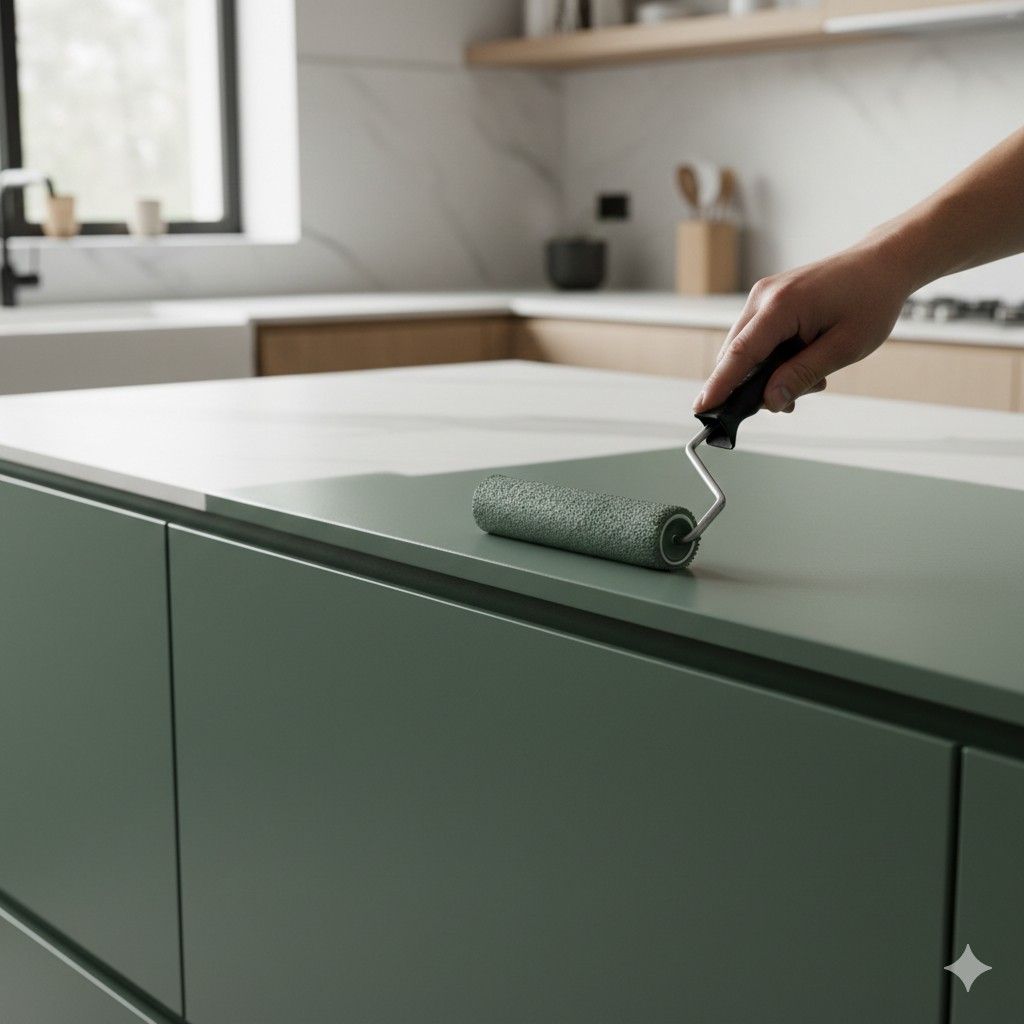
When it comes to painting your kitchen cabinets, the tools you choose can make a huge difference in the outcome. While paint sprayers are often a go-to for quick and even coverage, paint rollers remain essential for detailed work and achieving a flawless finish on kitchen cabinets. The best paint roller for kitchen cabinets can make a huge difference in the final result, ensuring smooth surfaces without streaks, brush marks, or uneven coverage.
In this guide, we’ll help you choose the best paint roller for kitchen cabinets, from bristle types to handle designs, and provide expert recommendations on the top rollers that will help you achieve a professional, smooth finish. Whether you’re a DIY enthusiast or a seasoned professional, this guide will equip you with the knowledge needed to make your kitchen cabinet painting project a success.
Why Use a Paint Roller for Kitchen Cabinets?
While paint sprayers and brushes have their place, paint rollers offer several advantages when it comes to painting kitchen cabinets. Here’s why you should consider using a roller for your next cabinet project:
- Speed: Paint rollers allow you to cover large, flat areas quickly, making them an efficient tool for painting kitchen cabinet doors and sides.
- Smooth, Even Finish: Paint rollers create an even layer of paint without leaving streaks, brush marks, or roller lines, which is especially important when working with cabinets.
- Minimal Overspray: Compared to spray painting, rollers produce minimal overspray, making them perfect for indoor projects, especially when working in smaller spaces like kitchens.
- Perfect for Flat Surfaces: Rollers excel at painting broad, flat areas like cabinet doors and panels, providing a smooth, uniform coat of paint.
Using the right roller can make the process of painting your kitchen cabinets faster and easier, helping you achieve a professional finish without the cost of hiring a painter.
Key Features to Look for in the Best Paint Roller for Kitchen Cabinets
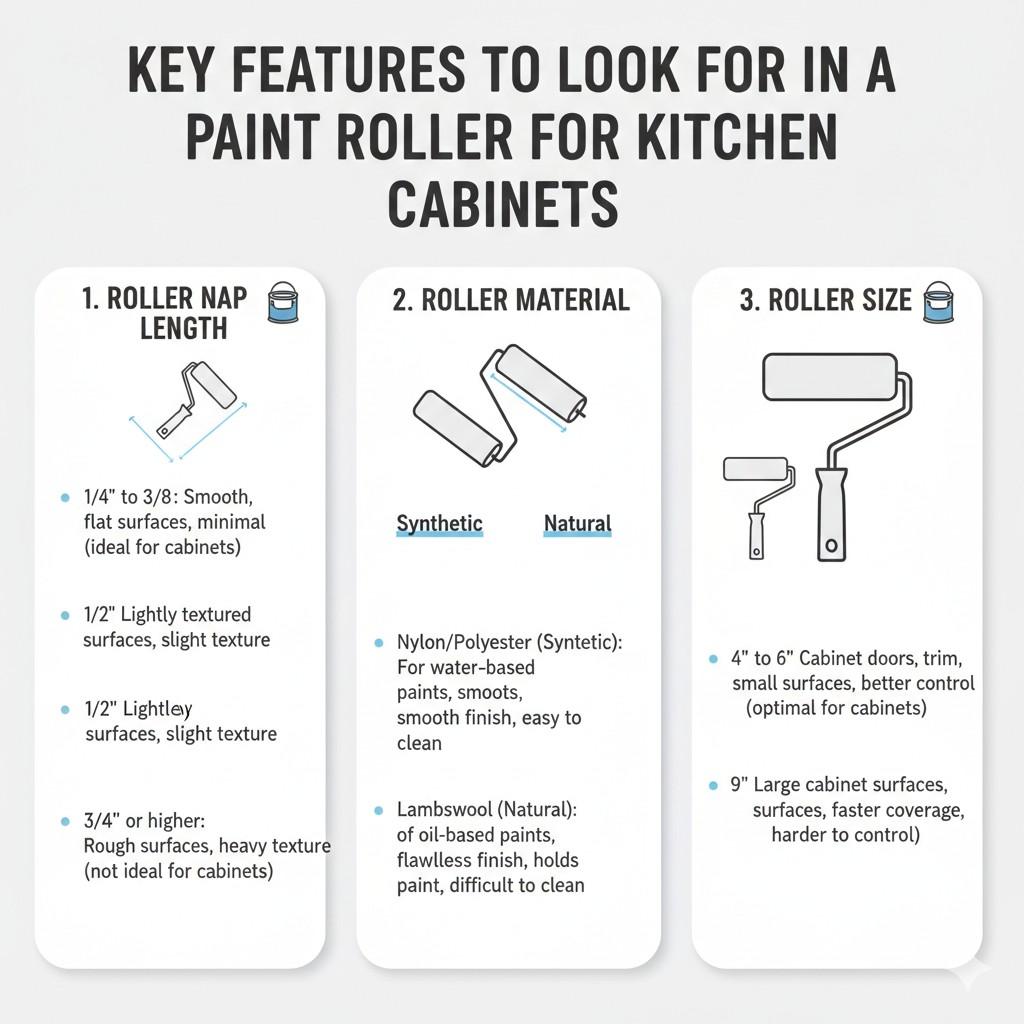
Before diving into the best paint rollers for kitchen cabinets, it’s important to understand the key features that contribute to a smooth, high-quality finish. Here’s what to consider:
1. Roller Nap Length
The nap length (or pile height) refers to the thickness of the roller cover. It affects how much paint the roller holds and how the paint is applied.
| Nap Length | Best For | Texture |
|---|---|---|
| 1/4” to 3/8” | Smooth, flat surfaces like cabinet doors | Smooth finish, minimal texture |
| 1/2” | Lightly textured surfaces | Slight texture but smooth enough for cabinets |
| 3/4” or higher | Rough surfaces like walls or ceilings | Heavy texture; not ideal for cabinets |
For kitchen cabinets, you want a short nap roller (1/4” to 3/8”), which will create the smoothest finish.
2. Roller Material
The material of the roller cover is also crucial in determining how well the roller performs.
| Material | Best For | Benefits |
|---|---|---|
| Nylon/Polyester (Synthetic) | Water-based paints (latex/acrylic) | Smooth finish, minimal shedding, easy to clean |
| Lambswool (Natural) | Oil-based paints | Provides a smooth, flawless finish, holds paint well, but difficult to clean |
For latex paints, synthetic fiber rollers are the best choice because they absorb and release paint evenly, ensuring a smooth application.
3. Roller Size
Roller size refers to the width of the roller, which impacts how much paint is applied and how much area you can cover at once. For kitchen cabinets:
| Roller Size | Best For | Key Benefits |
|---|---|---|
| 4” to 6” | Cabinet doors, trim, and small surfaces | Better control for precise work, easy to maneuver in tight spaces |
| 9” | Large cabinet surfaces | Faster coverage for large surfaces but harder to control in detail work |
For kitchen cabinets, 4” to 6” rollers are optimal for getting into tight areas and applying an even coat on doors and trim.
Best Paint Rollers for Kitchen Cabinets (DIY & Professional Options)
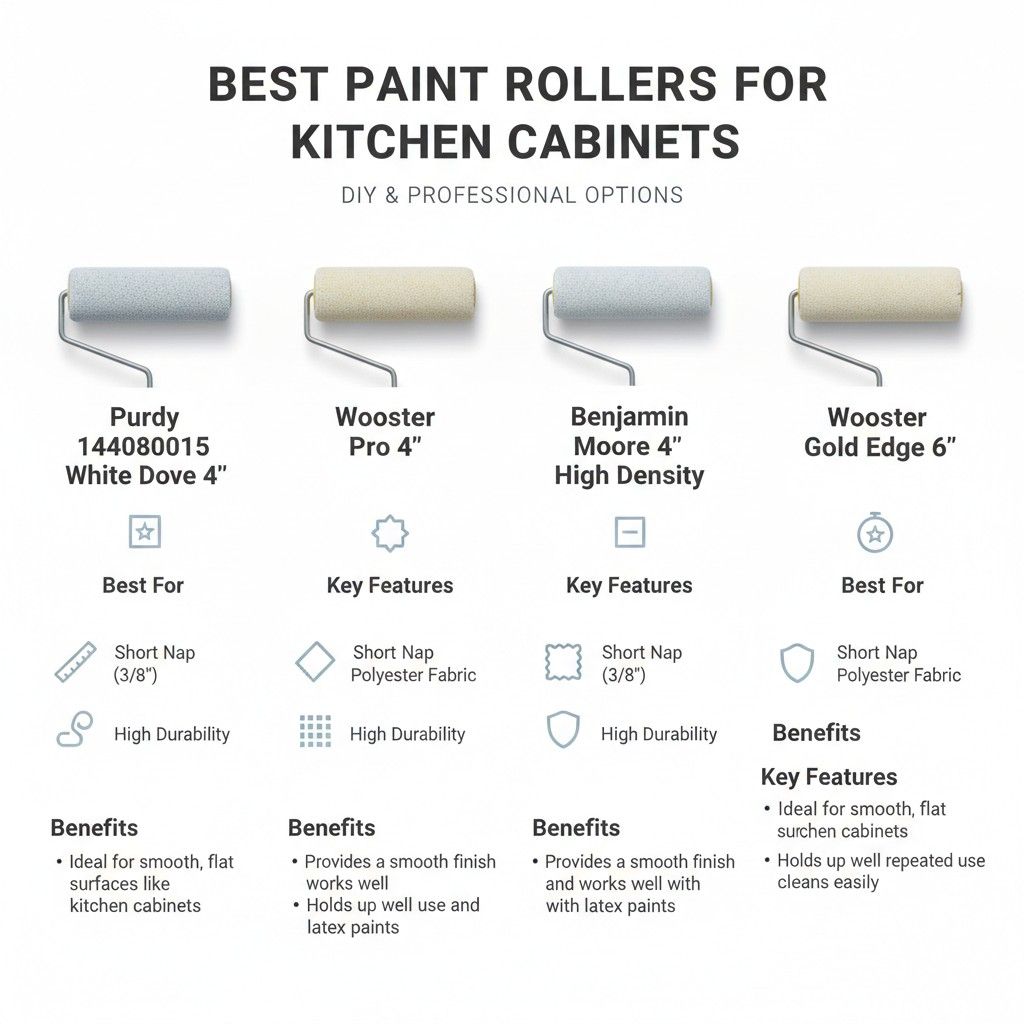
Now that you know what to look for, let’s dive into some of the best paint rollers for kitchen cabinets in 2025. These options provide excellent coverage, smooth finishes, and reliable performance.
1. Purdy 144080015 White Dove 4” Roller Cover
Best For: Smooth, even finish on kitchen cabinet doors.
Why Choose It?
The Purdy White Dove 4” Roller Cover is a top choice for achieving a smooth finish on kitchen cabinets. Its short nap (3/8”) is perfect for latex paints and provides excellent coverage without leaving texture marks. The polyester fabric ensures durability, and the roller holds just the right amount of paint for an even coat.
| Key Features | Benefits |
|---|---|
| Short Nap (3/8”) | Ideal for smooth, flat surfaces like kitchen cabinets |
| Polyester Fabric | Provides a smooth finish and works well with latex paints |
| High Durability | Holds up well to repeated use and cleans easily |
2. Wooster Pro 4” Roller Cover
Best For: Precision work on small surfaces and trim.
Why Choose It?
The Wooster Pro 4” Roller Cover is perfect for small cabinet doors and trim. The 3/8” nap is ideal for smooth surfaces, providing an even, professional-quality finish. The polyester cover helps avoid texture while allowing for excellent paint release, perfect for achieving a flawless coat on kitchen cabinets.
| Key Features | Benefits |
|---|---|
| Short Nap (3/8”) | Ideal for smooth, flat kitchen cabinet surfaces |
| Polyester Cover | Provides even paint distribution for smooth finishes |
| Durability | Resistant to wear and holds up well with repeated use |
3. Benjamin Moore 4” High Density Roller
Best For: Achieving a high-quality finish on kitchen cabinets.
Why Choose It?
The Benjamin Moore 4” High Density Roller is designed for professional-level painting with water-based latex paints. Its 1/4” nap ensures an ultra-smooth finish, perfect for kitchen cabinet doors. This roller is designed to create minimal texture and is ideal for precision work on small surfaces.
| Key Features | Benefits |
|---|---|
| Short Nap (1/4”) | Perfect for ultra-smooth cabinet surfaces |
| High Density Fabric | Ensures even application of paint with minimal texture |
| Professional Quality | Provides a flawless, streak-free finish |
4. Wooster Gold Edge 6” Roller Cover
Best For: Larger kitchen cabinets and surfaces.
Why Choose It?
The Wooster Gold Edge 6” roller cover is a great option for covering larger cabinet surfaces efficiently. Its medium nap (1/2”) works well on smooth surfaces and helps minimize texture without sacrificing coverage. This roller is perfect for water-based paints, ensuring an even finish across your cabinet doors and panels.
| Key Features | Benefits |
|---|---|
| Medium Nap (1/2”) | Provides excellent coverage with minimal texture |
| Durable Fabric | Works well for larger kitchen cabinet projects |
| Smooth Application | Ensures even paint distribution with minimal texture |
How to Use a Paint Roller for Kitchen Cabinets
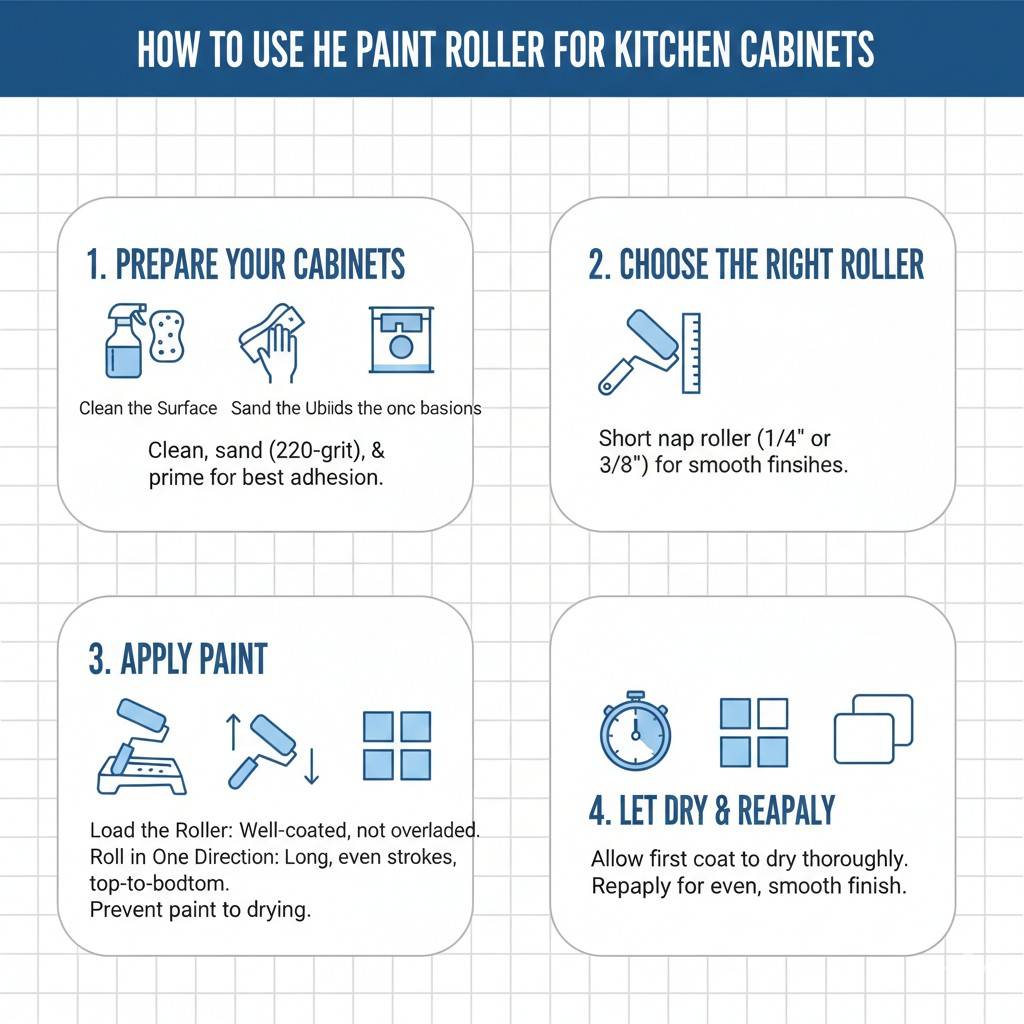
Using a paint roller to paint your kitchen cabinets is a straightforward process, but to achieve the best results, it’s important to follow the right steps. Here’s how to use your paint roller effectively for kitchen cabinets:
1. Prepare Your Cabinets
- Clean the Surface: Remove all grease, grime, and dirt from your cabinets using a degreaser or all-purpose cleaner.
- Sand the Cabinets: Lightly sand the surfaces to help the paint adhere. Use fine-grit sandpaper (220-grit) to ensure a smooth finish.
- Prime the Cabinets: Apply a high-quality primer designed for cabinets to create a base that helps the paint stick and ensures a more durable finish.
2. Choose the Right Roller
Select a roller that suits your cabinet surfaces. For smooth finishes, use a short nap roller (1/4” or 3/8”). This will provide the smoothest application.
3. Apply Paint
- Load the Roller: Dip the roller into the paint tray, ensuring it’s well-coated but not overloaded.
- Roll in One Direction: Apply the paint using long, even strokes in one direction (from top to bottom). Avoid going back and forth to prevent texture from developing.
- Work in Small Sections: Work in manageable sections, especially on larger cabinet doors, to prevent the paint from drying before you can smooth it out.
4. Let the Paint Dry and Reapply
Allow the first coat to dry thoroughly before applying a second coat. This ensures that the final finish is even and smooth.
See also Best Paint Brush for Kitchen Cabinets: Achieve a Smooth Finish with Expert Picks
Conclusion
Choosing the best paint roller for kitchen cabinets is key to achieving a smooth, professional-quality finish. Whether you choose the Purdy White Dove, the Wooster Pro, or the Benjamin Moore 4” High Density Roller, each of these brushes is designed to provide excellent coverage and flawless results. With the right brush, preparation, and technique, you can transform your kitchen cabinets into a polished, professional-looking feature in your kitchen.
Ready to get started on your kitchen cabinet project? Choose the perfect roller for your needs and achieve a flawless finish that will make your cabinets look brand new.
Looking for more DIY painting tips and recommendations? Subscribe to our newsletter for expert advice, product suggestions, and more kitchen makeover tips!
FAQs
- What’s the best paint roller for kitchen cabinets? The Purdy White Dove 4” Roller is one of the best for kitchen cabinets, providing smooth, even coverage with minimal texture.
- Can I use a larger roller for kitchen cabinets? For large cabinet doors or surfaces, a 6” roller like the Wooster Gold Edge works well to cover larger areas quickly and evenly.
- Should I use a brush or roller for kitchen cabinets? A roller is ideal for large, flat surfaces like cabinet doors. Brushes are better for trim work and edges.
- How do I get a smooth finish on kitchen cabinets? Use a high-quality synthetic paint roller, apply thin coats, sand between coats, and brush in the direction of the wood grain to avoid streaks.
- How many coats of paint should I apply on kitchen cabinets? Two to three coats are typically recommended for full coverage and a smooth finish on kitchen cabinets.
