
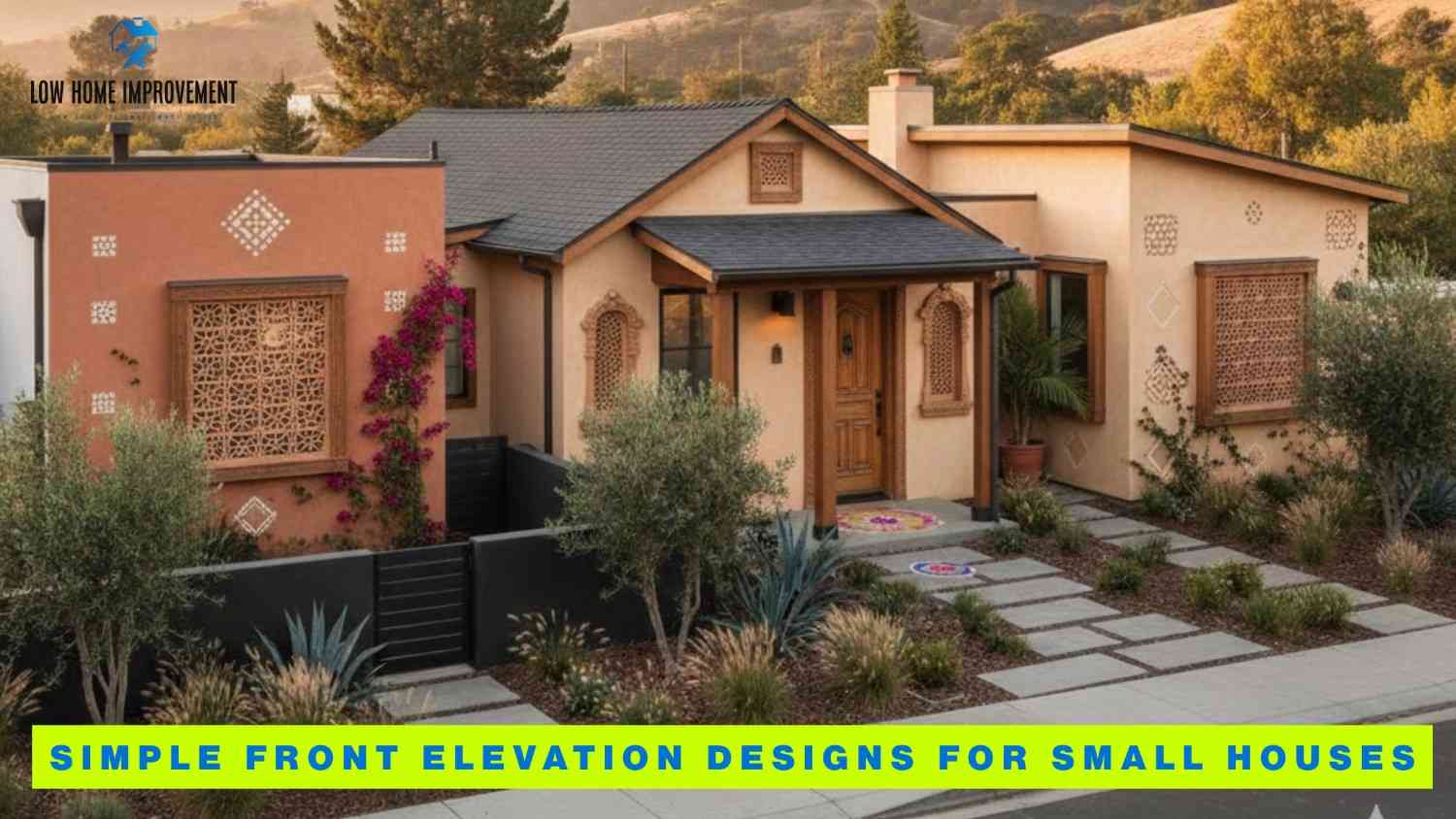
When it comes to building a small house, the front elevation design plays a crucial role in creating a lasting first impression. Whether you’re in the early stages of planning or already building, understanding the importance of front elevation can make all the difference. A simple yet elegant front elevation design not only boosts the curb appeal of your house but also reflects the personality of the homeowners.
The front elevation design for small houses is the face of your home. It’s the first thing visitors and passersby see, so it sets the tone for everything inside. A well-designed front elevation is more than just about looks. It also offers functional benefits. For example, it helps with ventilation and lighting, ensuring your small house feels spacious and airy. Plus, the right design can even make your house appear larger than it really is, which is a great advantage when you’re working with limited space.
In the Indian context, space is often a luxury, especially in cities where land is limited. That’s why simple front elevation designs for small houses focus on making the most of every square foot. Thoughtful design elements like open terraces, large windows, and clean lines can make a small home look more expansive. By avoiding bulky, overly decorative features, you can maintain a sleek and modern look while also making the best use of available space. Space optimization is not just about fitting more into the house but making the house feel more open and welcoming.
Another key aspect of designing a small home is keeping the budget in check. Simple front elevation designs are perfect for homeowners who want to keep costs down without compromising on aesthetics. Materials like concrete, glass, and wood can be used efficiently to create a stylish, modern facade that doesn’t break the bank. Opting for minimalist designs with fewer intricate details can also reduce labor and material costs, making the overall project more affordable.
Why Front Elevation Design Matters for Small Houses
The front elevation design for small houses is an essential aspect that influences both the look and functionality of a home. It’s the first thing people notice when they visit or drive by, so making a strong impression is crucial. A well-thought-out front elevation doesn’t just enhance the beauty of a small house but also maximizes the use of space. Front side simple front elevation designs for small houses focus on sleek, clean lines that don’t overcrowd the space. These designs prioritize functionality and beauty, ensuring that the exterior of your home reflects both modern aesthetics and practical living.
In addition to aesthetics, there are numerous functional benefits of investing in a good front elevation. A well-designed exterior can improve ventilation, natural lighting, and even increase the overall value of the home. Choosing low-cost front elevation designs for small houses that don’t compromise on quality can help keep the budget in check while achieving an elegant and practical result. Here are some key benefits of a thoughtful front elevation design:
- Aesthetics: Enhances the overall appearance of your home, making it more appealing to visitors and passersby.
- Ventilation: Allows for proper airflow and natural light, improving the comfort inside the house.
- Value: Boosts the resale value of the house, making it more attractive to potential buyers.
- Durability: A well-designed facade ensures long-lasting appeal, using materials that withstand the elements over time.
By focusing on simplicity and cost-effectiveness, front elevation designs for small houses can offer lasting benefits that are both visually pleasing and functional.
Types of Simple Front Elevation Designs for Small Houses
When designing a small house, simplicity is key. A simple front elevation design not only enhances the aesthetic appeal of your home but also ensures that the space is utilized effectively. There are several types of simple front elevation designs for small houses, each catering to different needs, preferences, and budgets. Whether you’re looking for a sleek modern facade or something more traditional, it’s essential to choose a design that complements the architecture of the house while also optimizing space. From minimalist single-story designs to compact multi-story homes, each type of front elevation serves a unique purpose, making it crucial to explore your options before making a decision.
In this section, we’ll focus on single floor front elevation designs for small houses, a popular choice for homeowners looking to maximize both style and functionality. These designs are perfect for those who want a simple yet elegant look without compromising on space or comfort.
Single Floor Front Elevation Designs for Small Houses
Single floor front elevation designs for small houses are an excellent choice for homeowners who want a straightforward and efficient approach to home design. These designs typically feature clean lines and minimalist features that make the most out of the available space. For many people in India, front elevation designs for small houses in India single floor often emphasize functional elements, such as maximizing natural light and incorporating practical features that suit local climates.
When designing a single floor front elevation, it’s important to balance both beauty and practicality. These designs can range from modern and contemporary to traditional and rustic, depending on the homeowner’s taste. The right design can make your small home appear more spacious and inviting. Here are some design ideas to consider:
- Open Porch: Adding an open porch or veranda can help expand the outdoor living area and enhance the house’s aesthetic appeal.
- Large Windows: Incorporating large windows on the front elevation allows for natural light to flood the interiors, making the space feel larger and airier.
- Sloping Roofs: A sloping or pitched roof adds a classic touch and helps with proper water drainage, especially in regions with heavy rainfall.
- Wooden Accents: Using wooden panels or accents can add warmth and texture to the exterior while keeping the overall design simple.
- Minimalist Columns: Adding thin, minimalist columns can offer a touch of elegance without making the design look too bulky or heavy.
In the Indian context, front elevation designs for small houses single floor often feature a mix of traditional and modern elements. For example, homes in urban areas might have sleek, modern facades with glass and steel, while homes in rural or suburban areas may use materials like stone or brick for a more rustic, traditional look. Combining these elements can create a beautiful balance of style and practicality, perfect for small homes.
These single floor front elevation designs are budget-friendly and provide a functional, stylish solution for homeowners looking to make the most of their limited space while maintaining an appealing facade.
G+1 Front Elevation Designs for Small Houses
G+1 front elevation designs for small houses offer a perfect solution for homeowners who need more space without increasing the footprint of the house. The G 1 G 1 front elevation designs for small houses focus on creating an elevated look, utilizing a ground floor plus one additional floor to maximize the usable area. These designs are especially ideal for small plots where expanding horizontally isn’t an option. The added floor provides extra living space while maintaining a neat, compact exterior.
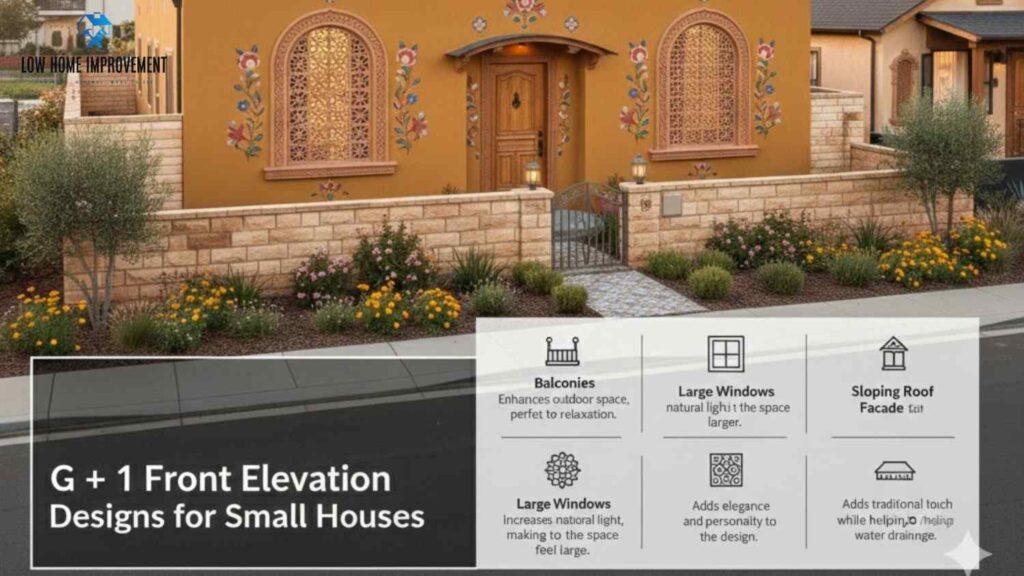
Incorporating balconies and façade elements into these designs can significantly enhance the curb appeal of your home. Balconies on the first floor allow for an outdoor living area that offers beautiful views of the surroundings while also improving ventilation. For many homeowners, these elements not only add beauty but also increase functionality, offering a space for relaxation or even a small garden. Here are a few design elements commonly included in G + 1 front elevation designs for small houses:
| Design Element | Benefit |
|---|---|
| Balconies | Enhances outdoor space, perfect for relaxation. |
| Large Windows | Increases natural light, making the space feel larger. |
| Decorative Façade | Adds elegance and personality to the design. |
| Sloping Roof | Adds a traditional touch while helping with water drainage. |
These features combine style with practicality, making G+1 front elevation designs for small houses a popular choice. They are particularly well-suited for urban areas or locations where space is limited but a two-story structure is possible. The thoughtful integration of architectural elements like balconies can transform the appearance of the house, ensuring it feels welcoming and spacious despite being on a smaller plot.
2 Floor & Duplex Front Elevation Designs for Small Houses
When considering 2 floor front elevation designs for small houses, there are multiple ways to make the most out of your space. These designs are perfect for homeowners who need more rooms but want to maintain a compact, efficient layout. Duplex front elevation designs for small houses take this concept further by incorporating a split-level structure that allows for separate living spaces in a two-story home. The design offers flexibility, as one floor can be designated for the family and the other for guests or rented out for extra income.
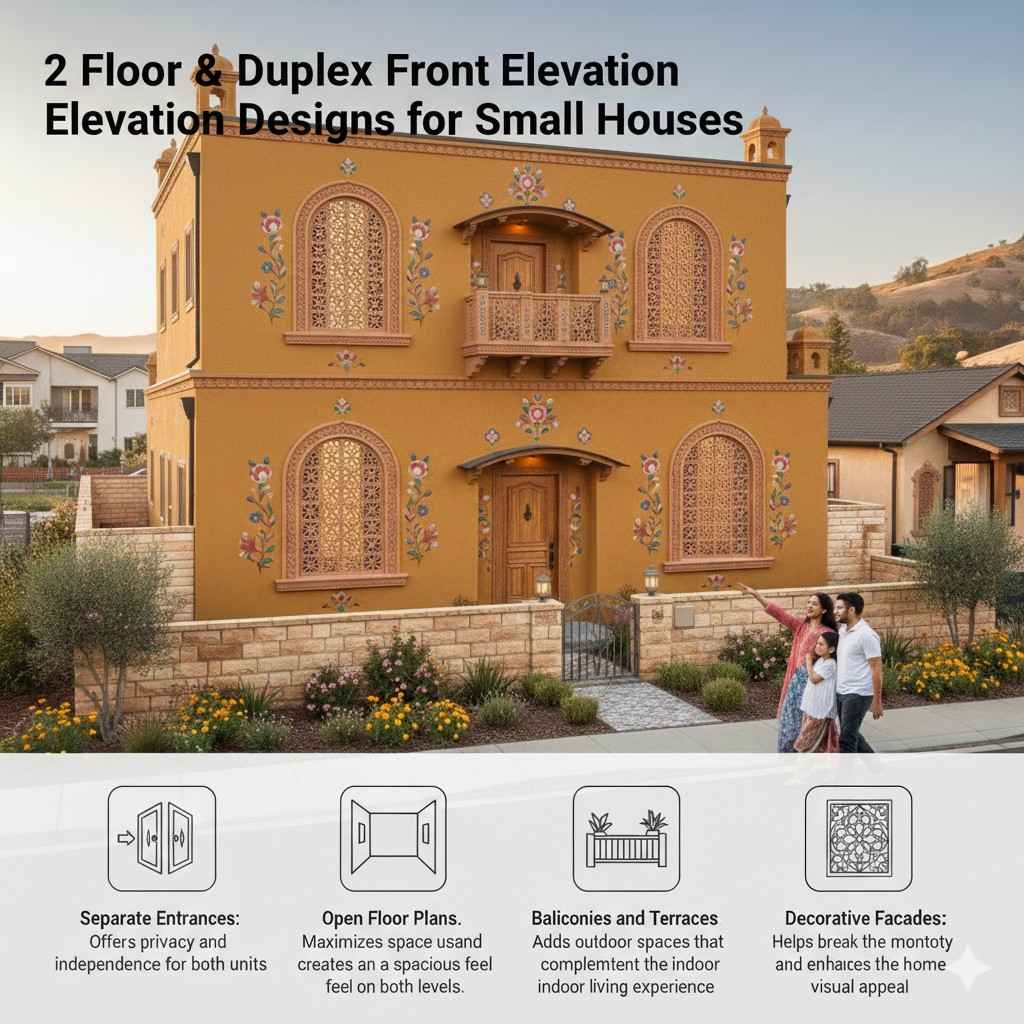
The key difference between 2nd floor front elevation designs for small houses and duplex homes is the usage and layout. A duplex often features two distinct units with separate entrances, making it ideal for multi-family living or renting. On the other hand, a two-floor home may have shared entrances and common areas on the ground floor while the upper level is reserved for bedrooms or private spaces. Here are some key features to consider when choosing a design:
- Separate Entrances (for duplex designs) – Offers privacy and independence for both units.
- Open Floor Plans – Maximizes space usage and creates a spacious feel on both levels.
- Balconies and Terraces – Adds outdoor spaces that complement the indoor living experience.
- Decorative Facades – Helps break the monotony and enhances the home’s visual appeal.
These designs provide flexibility, space, and a variety of aesthetic options. Whether you’re looking for a simple two-floor design or a more complex duplex layout, these homes offer ample space and style to suit small house needs.
Village Front Elevation Designs for Small Houses
Village front elevation designs for small houses often rely on traditional materials and natural elements to blend seamlessly with their surroundings. These designs are ideal for rural or semi-urban locations where sustainability and harmony with nature are prioritized. Low cost front elevation designs for small houses in villages are often built using locally available materials such as mud, brick, and wood. This not only keeps costs low but also ensures that the structure is suited to the local climate.
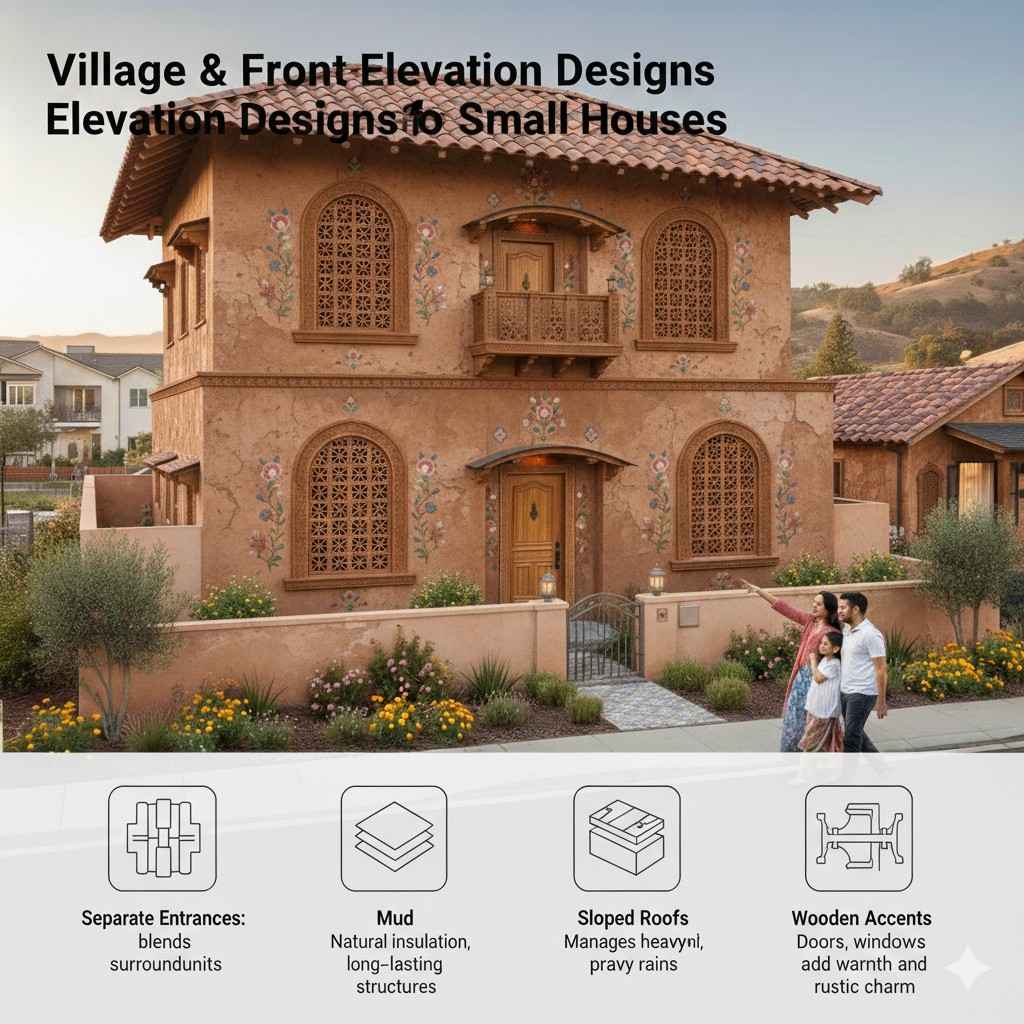
In village homes, climate suitability is a major consideration. For example, sloped roofs are commonly used to help with rainwater runoff in regions with heavy rainfall, while thick mud walls provide insulation, keeping homes cool in the summer and warm in the winter. Here are some key materials and design features often used in village front elevation designs for small houses:
- Mud – Provides natural insulation and blends well with the surroundings.
- Brick – Used for durability and long-lasting structures, often combined with mud.
- Sloped Roofs – Effective for managing heavy rains, offering practical benefits in regions with monsoon seasons.
- Wooden Accents – Used for windows, doors, and facades to add warmth and rustic charm.
These materials help in reducing construction costs while providing an aesthetically pleasing and climate-appropriate design. Village front elevation designs for small houses are a blend of practicality and tradition, creating homes that are both functional and beautiful in rural settings.
Modern Front Elevation Designs for Small Houses
Modern front elevation designs for small houses have evolved over the years, combining sleek lines, innovative materials, and functional spaces. Today, the emphasis is on creating a contemporary look while maximizing space and ensuring that the home feels welcoming and comfortable. These designs make use of cutting-edge materials and techniques to enhance the overall appeal and livability of the house, even when working with smaller spaces. Ultra modern modern front elevation designs for small houses focus on clean, minimalistic facades that incorporate bold architectural elements, creating a dramatic and sophisticated exterior without overcrowding the limited space available.
The front side modern front elevation designs for small houses focus on maximizing natural light, ventilation, and the efficient use of available space. Large windows and glass walls are commonly featured, allowing the house to feel more open and airy. Minimalism in design is key, with emphasis placed on function and form rather than overly decorative elements. With a modern approach, the focus is on creating a cohesive look that integrates seamlessly with the environment, whether it’s a bustling urban setting or a peaceful suburban area.
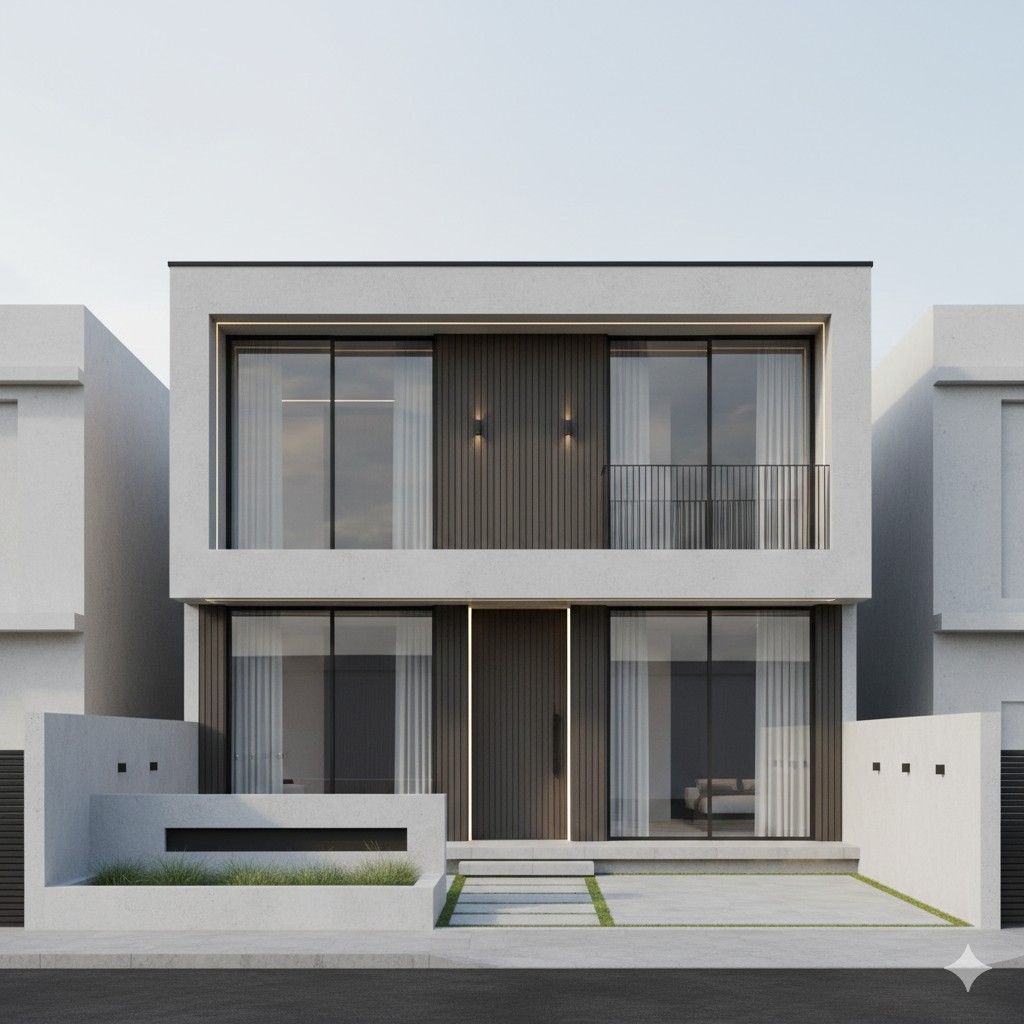
Below is a comparison of design elements and their benefits:
| Design Element | Benefit |
|---|---|
| Glass | Maximizes natural light, creates an open feel |
| Lighting | Highlights architectural features, adds ambiance |
| Textures | Adds depth and visual interest without clutter |
| Geometric Shapes | Creates a sleek, contemporary appearance |
| Sustainability | Reduces energy usage and promotes eco-friendliness |
Some of the popular design elements used in modern front elevations include:
- Glass – Large glass windows or glass facades help open up the space and make the house appear larger and more connected to the outdoors.
- Lighting – Thoughtful use of lighting can highlight architectural details and create an inviting atmosphere. LED lights integrated into the facade or around windows give a futuristic feel to the house.
- Textures – A mix of textures such as smooth concrete, polished wood, and metal panels adds depth to the design while maintaining a sleek look.
- Geometric Shapes – Bold geometric shapes, such as square or rectangular designs, are often incorporated into modern elevations to create visual interest.
- Sustainability – Many modern designs use eco-friendly materials like solar panels or recycled materials, ensuring that the home not only looks great but is also energy-efficient.
The use of ultra-modern elements in these front elevations elevates the home’s overall aesthetic, creating a striking visual effect while maintaining a balance between modernity and functionality. For example, the use of slim columns and minimal framing can create the illusion of more space, making even a small house feel expansive. Furthermore, modern front elevation designs for small houses can incorporate landscaping features like vertical gardens or smart exterior systems that contribute to a sustainable, stylish, and practical home.
In conclusion, embracing modern front elevation designs for small houses is a great way to maximize the beauty and functionality of a small home. By incorporating elements like glass, lighting, and textures, homeowners can achieve an elegant and contemporary facade that offers both practicality and visual appeal.
Indian Modern Front Elevation Designs for Small Houses
Indian modern front elevation designs for small houses are a beautiful blend of contemporary aesthetics with traditional cultural elements. In India, architecture is deeply influenced by its rich history and diverse cultures, which makes it essential to combine modern design techniques with cultural relevance. As urban spaces become more compact, homeowners are increasingly looking for front elevation designs that not only reflect their personal style but also respect traditional values and practices. The combination of modern front elevation designs for small houses in India with elements like intricate detailing, ornamental facades, and a functional layout makes for a visually appealing and meaningful home exterior.
One of the key factors when designing front elevations in India is the concept of Vastu Shastra, an ancient architectural science that focuses on the arrangement and design of living spaces to promote harmony and positive energy. In Indian modern front elevation designs for small houses, Vastu considerations are often integrated into the design process. For example, the positioning of windows and doors, the direction of the main entrance, and the use of specific materials can all play a role in enhancing the energy flow within the home. This cultural influence adds a layer of meaning to the design, ensuring that it’s not just visually striking but also aligned with the values of the homeowners.
Here’s a breakdown of how Vastu considerations impact the front elevation:
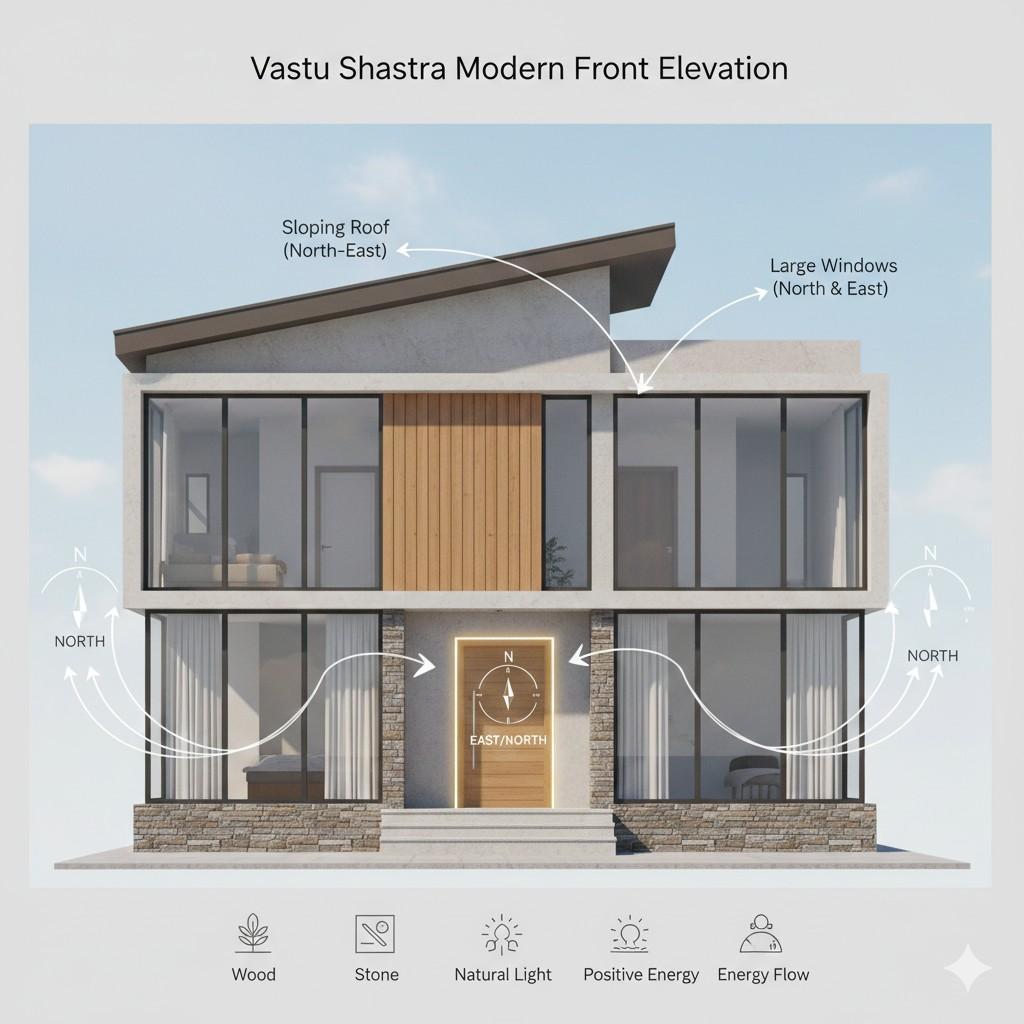
| Vastu Element | Design Impact |
|---|---|
| Main Entrance Position | Should face east or north for positive energy flow. |
| Windows and Doors | Large windows in the north and east allow natural light and positive energy. |
| Sloping Roof | Preferred sloping towards the north-east for balance and harmony. |
| Use of Natural Materials | Incorporates wood and stone to connect with nature and maintain warmth. |
Incorporating modern elements such as clean lines, minimalist facades, and large glass windows can create a fresh, contemporary look, while elements like traditional wooden carvings, sloping roofs, and stone work provide a nod to India’s architectural heritage. These modern and traditional elements work together to create a balanced, aesthetically pleasing home exterior. The use of natural materials, such as wood and stone, along with energy-efficient features like solar panels and rainwater harvesting systems, ensures that these designs are both sustainable and modern.
Overall, the front elevation designs for small houses in India reflect a thoughtful integration of modern style and cultural heritage. By merging modern architectural elements with traditional Indian values, homeowners can create beautiful, functional spaces that resonate with both their aesthetic desires and cultural beliefs. Whether it’s using modern materials or considering Vastu Shastra guidelines, these designs offer a harmonious blend of old and new, making them perfect for small homes in Indian cities and towns.
See also HVAC Tune-Up Checklist
Front Elevation Designs for Small Houses by Floor Count
Single Floor Elevation Designs (India)
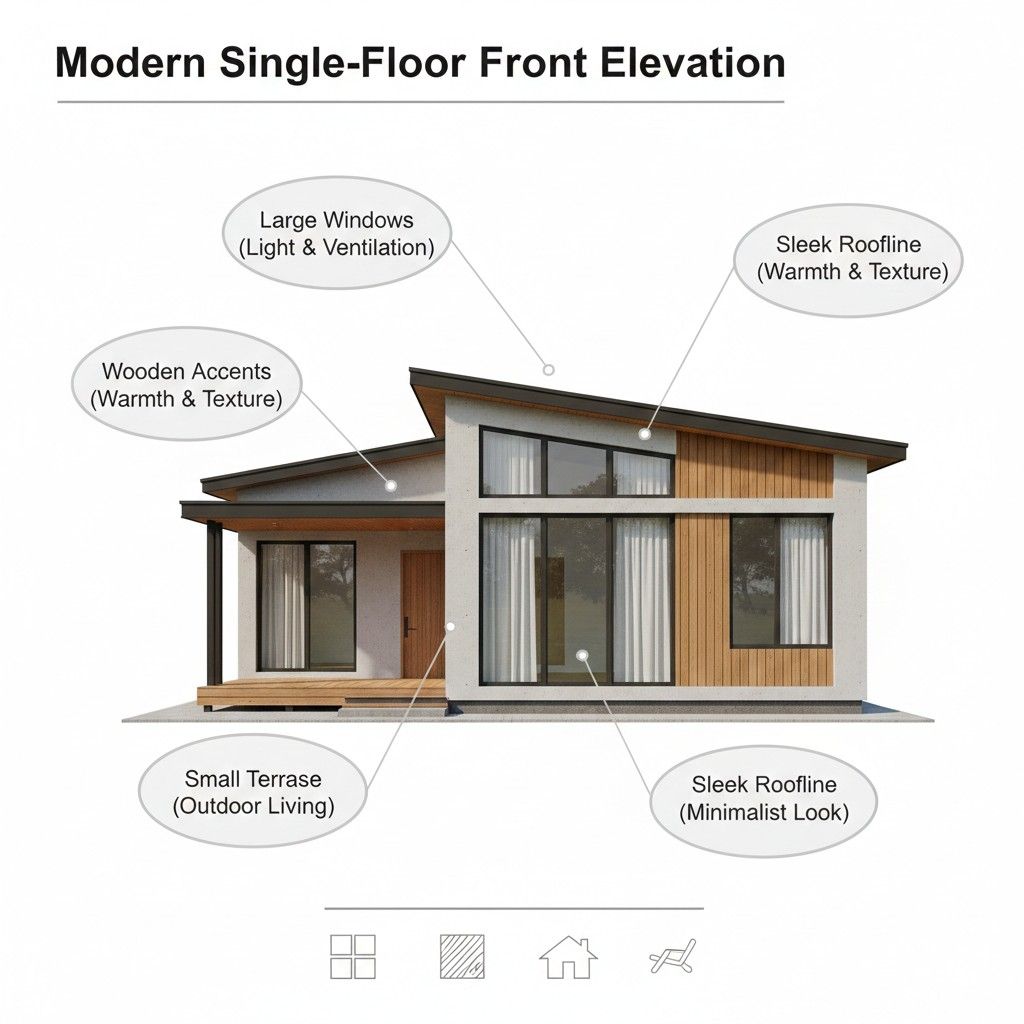
Single floor front elevation designs for small houses in India focus on creating functional and stylish exteriors that make the most of the available space. These designs are ideal for homeowners who prefer a compact layout without compromising on aesthetics. In front elevation designs for small houses in India single floor, there is an emphasis on clean lines, minimalistic features, and efficient use of space. The goal is to make the house look spacious and inviting despite the smaller footprint.
One of the most popular design elements in single floor front elevation designs for small houses is the use of large windows and open spaces that help in maximizing natural light and ventilation. Incorporating elements like wooden paneling, smooth plaster finishes, or decorative stone facades can give the home an elegant look without overcrowding the exterior. These designs are also often complemented with small balconies or terraces, which not only enhance the aesthetics but also provide a functional outdoor space.
Here’s a comparison of common design elements for single floor front elevation designs:
| Design Element | Benefit |
|---|---|
| Large Windows | Increases light and ventilation, making the space feel more open. |
| Wooden Accents | Adds warmth, texture, and a natural aesthetic. |
| Sleek Rooflines | Simple, modern look that complements a minimalist facade. |
| Terraces or Balconies | Enhances outdoor living space and adds beauty to the front elevation. |
These designs are perfect for those looking for simplicity, functionality, and beauty without overwhelming the exterior with excessive decoration.
Double Floor Elevation Designs
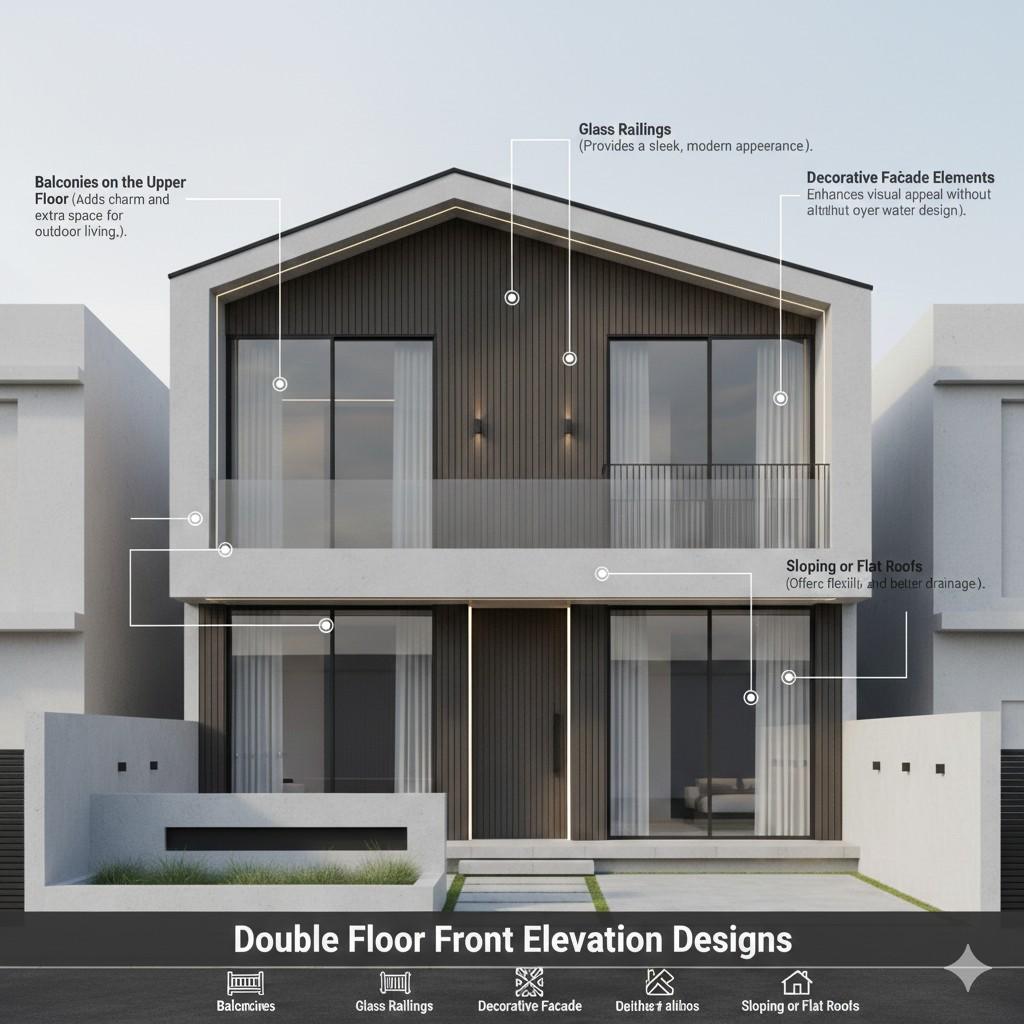
Double floor front elevation designs for small houses offer an excellent solution for homeowners who need more space without expanding horizontally. With 2 floor front elevation designs for small houses, the key is to maintain a balanced appearance while ensuring the structure looks cohesive and harmonious. These designs are often used in urban areas where space is limited, and vertical expansion becomes the most efficient option.
For front elevation designs for small houses in India double floor, the second floor is usually used for private spaces such as bedrooms, while the ground floor is reserved for common areas like the living room and kitchen. The exterior can be enhanced with modern elements like glass panels, clean geometric lines, and minimalist facades to keep the design fresh and contemporary. Additionally, features like balconies, terraces, and sloping roofs can further improve the visual appeal.
Here’s a quick overview of key elements in double floor front elevation designs:
| Design Feature | Benefit |
|---|---|
| Balconies on the Upper Floor | Adds charm and extra space for outdoor living. |
| Glass Railings | Provides a sleek, modern appearance. |
| Decorative Façade Elements | Enhances visual appeal without overpowering the design. |
| Sloping or Flat Roofs | Offers flexibility for design and better water drainage. |
These designs are ideal for those looking to maximize vertical space while maintaining a stylish, modern exterior. By integrating both modern design elements and functional features, the 2 floor front elevation designs for small houses create a harmonious and welcoming atmosphere for any small home.
Low Cost Front Elevation Designs for Small Houses
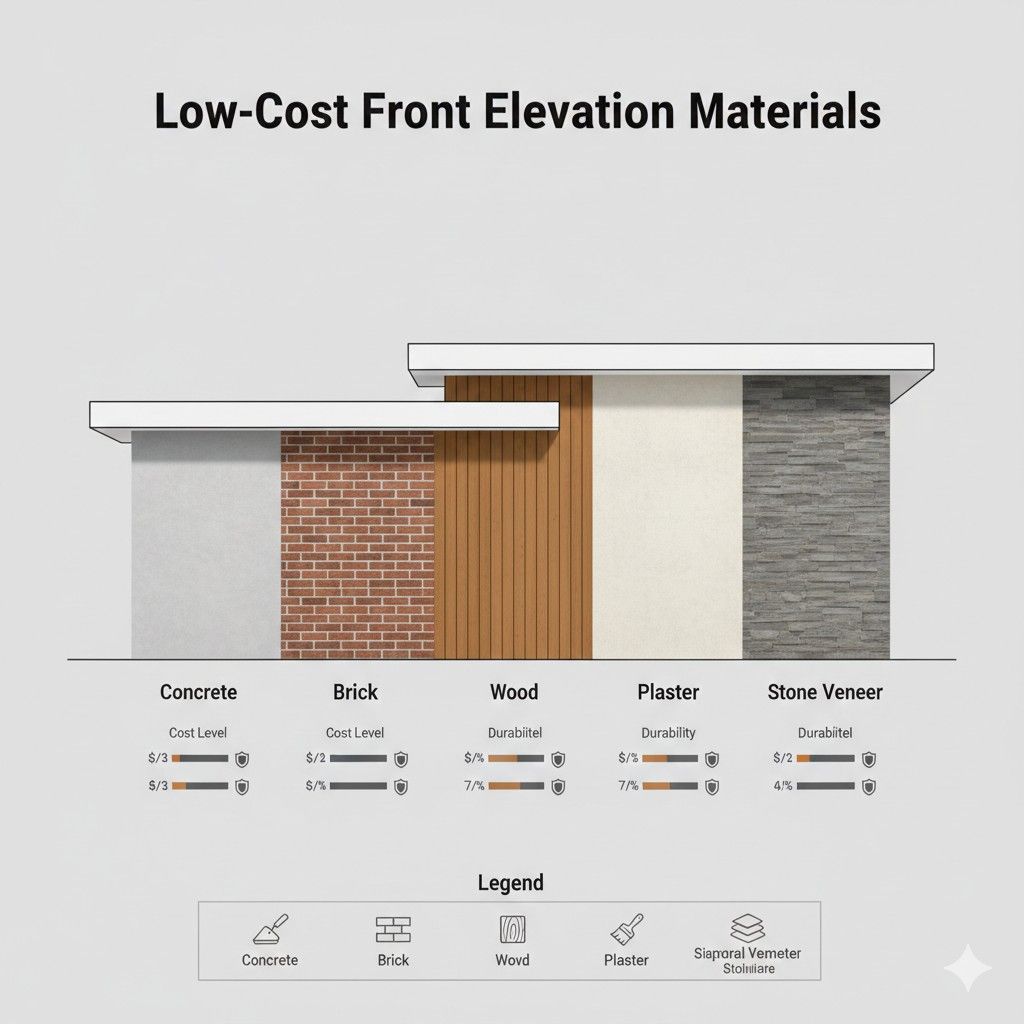
When designing a small house, budget is often a major consideration, and finding ways to keep the costs low without compromising on quality or aesthetics is essential. Low cost front elevation designs for small houses focus on using affordable materials and efficient design strategies that offer good value for money. These designs prioritize simplicity and functionality while maintaining an attractive and welcoming appearance. By using the right materials and focusing on clean, simple lines, homeowners can create an elegant front elevation without exceeding their budget.
Some simple front elevation designs for small houses can be made more cost-effective by incorporating the following cost-saving ideas:
- Use of Local Materials – Opting for materials that are locally available can significantly reduce transportation costs.
- Minimalist Design – Simple, clean lines without excessive decorative elements can lower construction and material costs.
- Affordable Finishes – Using concrete or cement finishes instead of expensive cladding can cut down on exterior costs.
- Pre-fabricated Elements – Incorporating pre-fabricated windows, doors, and panels can save time and money during construction.
- Energy-Efficient Features – Installing energy-efficient windows and insulation can help reduce long-term energy costs.
Here’s a comparison of common materials, their costs, and durability for low cost front elevation designs for small houses:
| Material | Cost | Durability |
|---|---|---|
| Concrete | Low | High – Lasts for many years and requires minimal maintenance. |
| Brick | Moderate | High – Durable but can be costly depending on type. |
| Wood | Moderate to High | Medium – Requires maintenance but offers aesthetic appeal. |
| Plaster | Low | Medium – May need repainting after a few years. |
| Stone Veneer | Moderate | High – Durable but may require more maintenance. |
Using a combination of these affordable materials in simple front elevation designs for small houses can help reduce costs while ensuring the house remains durable and visually appealing.
See also Jaroconca Mountain
Color Combinations for Small House Front Elevations
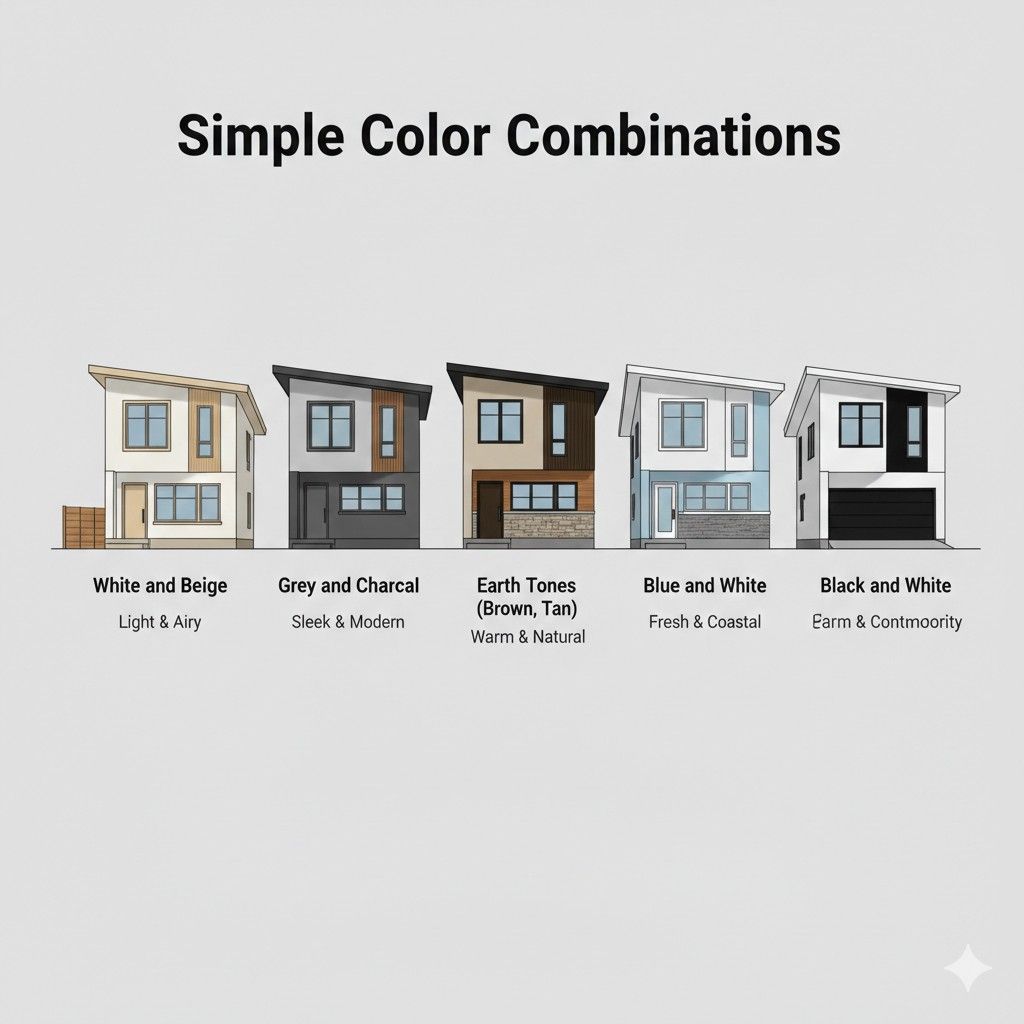
Choosing the right colors for your modern front elevation designs for small houses is an important part of creating a welcoming and aesthetically pleasing exterior. Color combinations can greatly impact the overall look of a small house, giving it personality, warmth, and style. When selecting a color palette, it’s crucial to consider both the design elements of the house and the climate. The right colors can make the house feel larger, more inviting, and blend seamlessly with its surroundings.
Some simple front elevation designs for small houses can be enhanced with the following color combinations:
| Color Combination | Visual Effect |
|---|---|
| White and Beige | Creates a light, airy, and expansive feel. |
| Grey and Charcoal | Offers a sleek, modern look with elegance. |
| Earth Tones (Brown, Tan) | Provides a warm, natural aesthetic, blending well with outdoor surroundings. |
| Blue and White | Gives a fresh, coastal, and serene feel. |
| Black and White | A bold, contemporary look with high contrast. |
Climate should also play a role in your color choices. In warmer climates, light colors such as whites, light beiges, or pastels help reflect heat, keeping the house cooler. In cooler climates, darker tones like deep blues or greys absorb heat and create a warmer, cozier atmosphere.
By carefully selecting color combinations based on the local climate and the modern front elevation designs for small houses, you can ensure that your home looks great while also being practical and energy-efficient.
Materials Used in Small House Front Elevation Designs
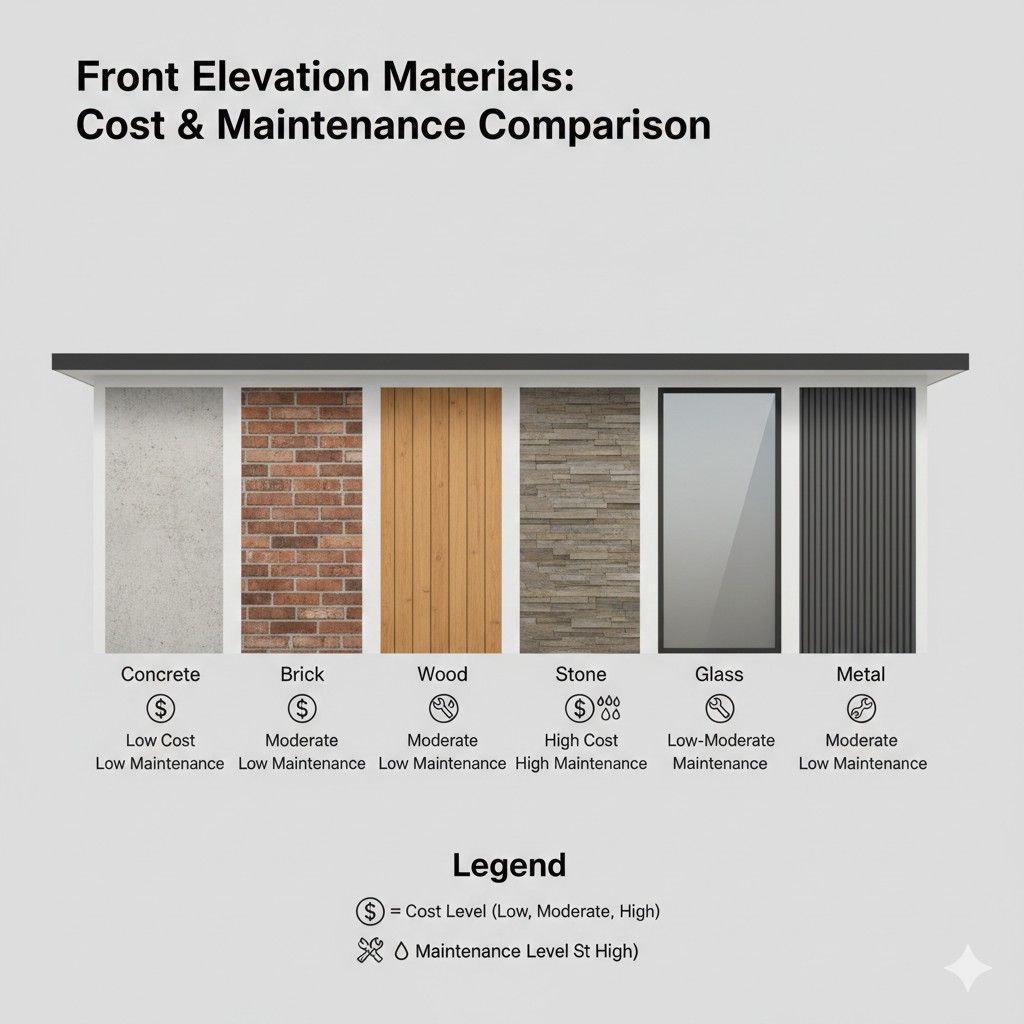
The front elevation designs for small houses rely heavily on the choice of materials to determine not only the aesthetic appeal but also the durability and functionality of the house. Choosing the right materials is crucial for achieving a modern yet cost-effective look while also ensuring that the house withstands the elements and remains low maintenance. Modern front elevation designs for small houses make use of a variety of materials, each offering different benefits depending on the design preferences, budget, and climate conditions.
Here are some of the most commonly used materials in front elevation designs for small houses:
- Concrete – Durable, affordable, and versatile, concrete is widely used for both structural and decorative purposes.
- Wood – Adds warmth and texture, but requires regular maintenance to prevent wear and tear.
- Stone – A natural material that provides elegance and durability but can be more expensive.
- Glass – Modern and sleek, offering a contemporary look while maximizing natural light.
- Brick – Classic, durable, and suitable for traditional or modern designs, but can be costly.
- Metal – Often used for accent features like railings or roofs, providing a modern, industrial look.
Here’s a comparison of materials based on cost and maintenance:
| Material | Maintenance | Cost |
|---|---|---|
| Concrete | Low – Requires minimal upkeep | Low – Very affordable |
| Wood | High – Needs regular sealing and protection | Moderate – Varies by type |
| Stone | Medium – Requires occasional cleaning | High – Expensive, especially for natural stone |
| Glass | High – Requires cleaning and care | Moderate to High – Depending on type |
| Brick | Low – Durable and easy to maintain | Moderate – Affordable but higher than concrete |
| Metal | Low – Durable and resistant to weather | Moderate – Depends on the type of metal |
Each material has its own unique characteristics, so when selecting materials for modern front elevation designs for small houses, it’s important to balance both the budget and the level of maintenance you’re willing to commit to.
Front Elevation Designs for Small Houses in India (City vs Village)
The front elevation designs for small houses in India vary significantly between urban and rural settings due to differences in space, budget, and architectural styles. In cities, there is a greater focus on modern aesthetics, while in villages, traditional elements often take center stage, reflecting the cultural heritage and climate of the region. The village front elevation designs for small houses tend to rely on local materials and construction techniques, while urban designs incorporate more modern and industrial materials for a sleek and contemporary appearance.
Here’s a comparison of urban vs rural front elevation designs for small houses in India:
| Feature | Urban (City) | Rural (Village) |
|---|---|---|
| Materials | Modern materials like glass, metal, concrete, and stone | Traditional materials like mud, brick, and wood |
| Design Style | Sleek, minimalist, and contemporary | Traditional, rustic, with cultural elements |
| Color Palette | Bold and modern tones like whites, greys, and blacks | Earthy tones like browns, ochres, and terracotta |
| Space Utilization | Maximized use of available urban space with compact designs | More expansive, open spaces with courtyards or verandas |
| Roof Style | Flat or sloped roofs with modern touches | Sloped roofs to manage rainfall, using tiles or thatch |
The design choices for front elevation designs for small houses in India are deeply influenced by the local climate, culture, and available resources. While urban homes often prioritize space optimization and a modern look, rural homes are designed to blend with the natural environment, using locally available materials and traditional techniques to create a cozy, sustainable space.
Mistakes to Avoid in Small House Front Elevation Design
When designing the front elevation for small houses, it’s easy to get carried away with aesthetic choices and forget the functional aspects. Here are some common mistakes to avoid when creating simple front elevation designs for small houses and low cost front elevation designs for small houses:
| Mistake | Solution |
|---|---|
| Overcrowding with Decorative Elements | Keep the design simple and clean to avoid clutter. |
| Neglecting Natural Light and Ventilation | Incorporate large windows or open spaces to maximize airflow and light. |
| Ignoring the Local Climate | Choose materials and design features that are suited to the local weather conditions. |
| Focusing Only on Aesthetics | Balance beauty with functionality to ensure comfort and practicality. |
| Not Considering the Future | Plan for long-term maintenance and potential future expansions. |
Explanations:
- Overcrowding with Decorative Elements: It’s tempting to add a lot of decorative elements to make your home look unique, but too many details can make the elevation look cluttered. Instead, focus on simplicity and elegance.
- Neglecting Natural Light and Ventilation: Small homes can feel cramped if there’s insufficient light or airflow. Consider incorporating larger windows or open spaces in the design to keep the interior airy and bright.
- Ignoring the Local Climate: A design that works in one part of India may not be suitable for another region. Make sure to consider the local climate when choosing materials and design features. For example, sloping roofs work well in areas with heavy rain.
- Focusing Only on Aesthetics: While it’s important for your home to look beautiful, you shouldn’t sacrifice functionality. The elevation should be practical and serve your everyday needs.
- Not Considering the Future: Over time, your needs may change. Consider how your front elevation design will evolve with the addition of new features, like landscaping or future building extensions.
By avoiding these common mistakes, you can create a simple front elevation design that is both aesthetically pleasing and highly functional for your small house.
Frequently Asked Questions
Q1: What are the best materials for simple front elevation designs for small houses?
A: The best materials for simple front elevation designs include concrete, brick, and wood. These materials offer a balance of durability, cost-effectiveness, and aesthetic appeal. Concrete is especially popular for its low maintenance and versatility.
Q2: How can I make a small house front elevation look modern without overspending?
A: To achieve a modern look on a budget, focus on clean lines, large windows, and minimalist elements. Opt for cost-effective materials like concrete or plaster, and incorporate simple yet stylish design features such as metal accents or wooden details.
Q3: What is the difference between g+1 front elevation designs for small houses and single-floor designs?
A: G+1 front elevation designs include a ground floor plus one additional floor, offering more living space. Single-floor designs are more compact and may be more budget-friendly, making them ideal for smaller plots.
Q4: Can g+1 front elevation designs for small houses fit in narrow urban plots?
A: Yes, g+1 front elevation designs are ideal for narrow plots as they expand vertically, optimizing the use of limited horizontal space. These designs maintain an elegant, functional look while offering extra living space.
Q5: Are front elevation designs for small houses in India influenced by Vastu?
A: Yes, many front elevation designs for small houses in India incorporate Vastu Shastra principles. This includes positioning windows and entrances according to directions that promote positive energy, ensuring both functionality and harmony.
Q6: How do I incorporate sustainability in my front elevation design?
A: To incorporate sustainability, choose eco-friendly materials like recycled wood, energy-efficient glass, and low-maintenance finishes. Solar panels, rainwater harvesting systems, and proper insulation can further enhance the sustainability of your design.
Q7: What are some budget-friendly ways to add character to simple front elevation designs for small houses?
A: Use decorative elements like accent lighting, plants, or small wooden details to add character without increasing costs. A simple color palette and clean lines can also make a significant visual impact while remaining cost-effective.
Q8: How can I optimize the space in a g+1 front elevation design?
A: To optimize space in a g+1 front elevation design, focus on an open-plan layout for the ground floor, use multi-functional furniture, and ensure the upper floor has well-placed windows for ventilation and natural light.
Final Thoughts on Simple Front Elevation Designs for Small Houses
When designing simple front elevation designs for small houses, it’s essential to balance aesthetics with practicality. Modern front elevation designs for small houses can transform even a small space into something functional and beautiful. By choosing materials that are both cost-effective and durable, you can create a lasting impression without exceeding your budget. Simple designs often have the most powerful impact, focusing on clean lines, open spaces, and well-placed windows that bring in natural light and ventilation.
Budget advice for front elevation designs for small houses is to prioritize the essentials: use affordable yet high-quality materials like concrete or plaster, and keep the design minimalist to avoid unnecessary costs. Consider long-term durability over short-term savings, ensuring that the exterior remains attractive and functional for years to come.
Whether you’re opting for a g+1 front elevation design or a single-floor layout, both offer unique benefits depending on your space and budget. A g+1 design maximizes vertical space, making it ideal for smaller plots, while a single-floor design focuses on compact and efficient use of space. The key is to choose a design that aligns with your needs, budget, and style preferences. Ultimately, a well-thought-out front elevation can make your small house not only beautiful but also practical and comfortable to live in.
